
BGB Price Prediction: What to Expect Next
📈 Dive into BGB price trends, expert insights, and market factors shaping its future. Stay informed to make smart moves in Pakistan's crypto scene! 🚀
Edited By
George Sinclair
Bitcoin has transformed from a niche digital asset into a mainstream investment option, attracting traders and investors worldwide. Its price history is marked by sharp rises and sudden downturns, reflecting the volatile nature of cryptocurrencies. Understanding the forces behind Bitcoin’s price movements helps investors anticipate future trends and make more informed decisions.
Key factors shaping Bitcoin’s price include market demand, regulatory decisions, technological upgrades, and global economic conditions. For instance, when countries impose stricter regulations or ban crypto trading, Bitcoin’s price often reacts sharply. Conversely, technological advances like the implementation of the Lightning Network have boosted usability and market confidence, supporting price growth.

In Pakistan, increasing interest in Bitcoin comes with unique challenges such as limited regulatory clarity, banking restrictions, and awareness gaps. Yet, platforms like JazzCash and Easypaisa integration with crypto trading apps demonstrate growing accessibility. Investors need to monitor both international developments and local regulations to navigate this evolving space.
Successful Bitcoin predictions require combining technical analysis, fundamental insights, and awareness of external factors influencing investor behaviour.
Common methods to forecast Bitcoin include:
Technical analysis: Using price charts and indicators to identify patterns and potential reversals.
Sentiment analysis: Gauging market mood through social media and news trends.
On-chain analysis: Studying blockchain data such as transaction volumes and wallet activity.
No single approach guarantees accuracy, given Bitcoin’s sensitivity to unexpected news and macroeconomic shifts. Traders should use predictions as guidance, not absolute certainty.
This article will unpack these aspects in detail, offering Pakistani investors practical insights while situating Bitcoin’s price dynamics within the broader global context. By understanding key influences, readers can better prepare for potential ups and downs, capitalise on opportunities, and avoid common pitfalls in cryptocurrency investments.
Understanding Bitcoin's price history and market behaviour is essential for anyone serious about trading or investing in this volatile asset. The cryptocurrency market operates differently from traditional markets, with unique drivers shaping its price movements. By examining past trends and the factors behind its volatility, investors can make more informed predictions and avoid costly mistakes. For instance, recognising how geopolitical shifts or regulatory announcements have influenced price swings helps traders stay ahead.
Bitcoin's price journey has been marked by several key milestones that reflect its growing adoption and market maturity. For example, it first hit parity with the US dollar in early 2011, which was a turning point for public interest. Later, in December 2017, Bitcoin reached nearly $20,000, driven by a surge in retail speculation. More recently, the all-time high crossed $60,000 in 2021, backed by institutional investments and mainstream acceptance. These milestones illustrate how sentiment and market participants evolve over time, offering cues for future bullish or bearish phases.
The history of Bitcoin is also defined by sharp crashes followed by recoveries, which signal the market’s cyclical nature. The 2013 crash saw prices plunge from over $1,000 to around $200 within months, largely due to regulatory warnings and exchange failures. Similarly, the 2018 bear market wiped out nearly 80% of Bitcoin’s value from its previous peak. However, these slumps have always been followed by recoveries, typically driven by renewed interest or changes in regulation. Recognising these patterns helps traders manage risk and identify buying opportunities during downturns.
Bitcoin’s liquidity plays a critical role in its price stability. Unlike well-established financial markets, Bitcoin's trading volume remains relatively small compared to traditional assets. This means large buy or sell orders can swing prices sharply. For example, a single large sale on a major exchange can trigger a flash crash. Understanding liquidity constraints allows investors to anticipate when market moves might be exaggerated and to plan trades accordingly.
Speculation drives much of Bitcoin’s price volatility. The market attracts short-term traders looking to capitalise on rapid price changes, creating intense buying or selling pressure. Patterns such as 'pump and dump' schemes or leveraged trading amplify price swings, often decoupling prices from fundamental values. In Pakistan, as with global markets, these speculative behaviours make timing entry and exit points crucial to avoid losses.
Bitcoin does not operate in isolation; global economic events can affect its price significantly. For instance, during periods of major currency devaluations, like the Zimbabwe hyperinflation in the late 2000s or recent PKR fluctuations, Bitcoin has attracted interest as a store of value. Conversely, economic crises like the COVID-19 pandemic initially caused sharp sell-offs, followed by renewed interest as investors sought alternative assets. Monitoring these events helps investors understand external pressures influencing Bitcoin’s price.
Awareness of Bitcoin's past behaviour and volatility factors equips investors to interpret price signals better, manage risks prudently, and identify opportunities aligned with broader market and economic trends.
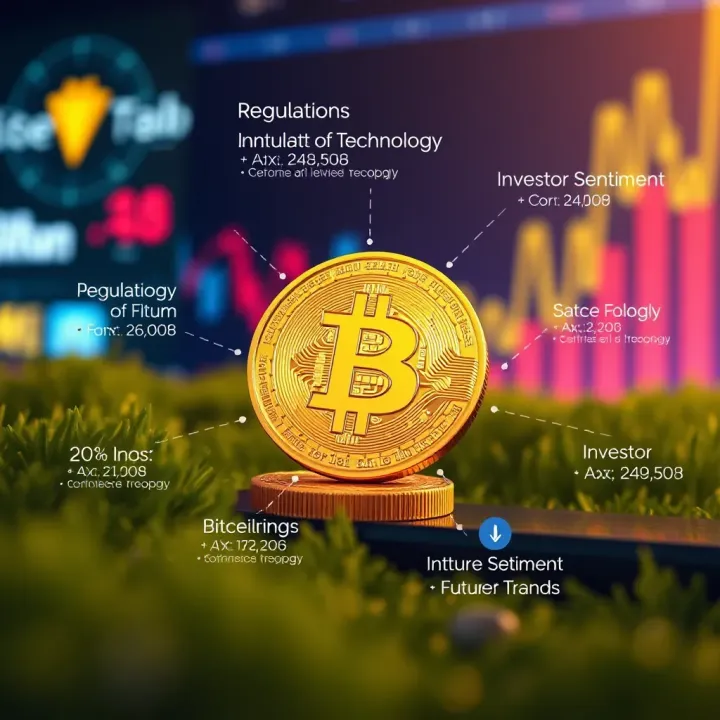
Understanding the key influences on Bitcoin price movements is vital for traders and investors to make informed decisions. Bitcoin's price does not change in isolation; it reacts strongly to regulatory shifts, technological progress, and broader market sentiment. These factors together create the dynamic conditions that shape Bitcoin's value over time.
Regulations play a big role in driving Bitcoin’s price, especially given the growing scrutiny from governments worldwide. In Pakistan, although Bitcoin trading is not officially banned, the regulatory environment remains unclear. The lack of formal guidelines causes uncertainty among traders and investors, often leading to hesitation or sharp price shifts when the State Bank of Pakistan (SBP) issues statements or warnings against unregulated cryptocurrency use.
The SBP itself has been cautious, emphasising risks related to fraud and money laundering. It has not legalised Bitcoin as an official currency but allows individuals to hold it privately. Such mixed stances tend to keep the market volatile in Pakistan. Traders should watch SBP announcements closely, as even subtle regulatory hints can trigger significant market moves.
Globally, several countries are shaping Bitcoin's landscape through their regulations. For instance, strict rules in countries like China have historically caused price drops, while more open policies in places like the USA and some European nations encourage wider adoption and investment. International regulatory developments influence Pakistani investors indirectly by affecting global liquidity and institutional interest in Bitcoin.
Blockchain upgrades can impact Bitcoin’s price by improving its efficiency, security, or scalability. Key updates like the SegWit upgrade or the Taproot implementation enhance transaction speed and privacy, which often reassures investors about Bitcoin's long-term viability. When such upgrades approach, markets tend to price in expected benefits, sometimes pushing prices upwards.
Besides core blockchain development, adoption by payment platforms also affects the price. If popular services such as PayPal, Square, or regional platforms start accepting Bitcoin more widely, accessibility increases, boosting demand. For Pakistani users, integration with local digital wallets like JazzCash or Easypaisa could similarly encourage investment, provided regulatory acceptance follows.
Media coverage shapes public perception and therefore market sentiment vigorously. Positive news, such as a major corporation investing in Bitcoin, typically sparks bullish trends. Conversely, reports of regulatory crackdowns or security breaches prompt sell-offs. Pakistani media discussion around Bitcoin also influences interest and trust among local investors.
Institutional investors add another layer of influence. When banks, hedge funds, or asset managers enter the Bitcoin market, their large volume trades can lead to pronounced price movements. Their involvement often signals market maturity and potential stabilisation, which can attract more retail investors.
Lastly, global economic conditions and geopolitical events reverberate through Bitcoin markets. In times of economic instability or foreign exchange pressure — situations not unfamiliar to Pakistan — investors might turn to Bitcoin as a hedge. For example, US inflation data or political unrest in resource-rich nations can cause sudden Bitcoin surges or declines.
Tracking these influences helps investors anticipate Bitcoin’s price direction and adjust their strategies suitably. Knowing how regulations, technology, and sentiment affect Bitcoin equips traders and investors with a practical edge in a fluctuating market.
Accurately predicting Bitcoin prices requires a mix of methods that analyse different aspects of the market. Traders and investors rely on both fundamental and technical approaches, along with sentiment analysis, to make informed decisions. These techniques, when combined, provide a clearer picture of potential price movements and help reduce risks associated with volatility.
Assessment of network activity involves studying Bitcoin’s underlying blockchain metrics such as transaction volume, active addresses, and mining difficulty. For example, a rise in daily active addresses often signals increased user engagement, which can push prices up. On the other hand, declining transaction counts may hint at weakening demand. Monitoring network activity offers a direct insight into how much Bitcoin is being used or moved, which reflects its real-world value and utility beyond just trading.
Supply and demand dynamics play a central role in Bitcoin’s price behaviour due to its fixed supply capped at 21 million coins. When demand grows faster than supply availability—for example, following halving events that reduce miner rewards—prices tend to rise. Conversely, if many holders start selling or large amounts flood the market, prices can drop quickly. Understanding these basic economics helps investors gauge whether Bitcoin is undervalued or overvalued at any point.
Use of price charts and indicators like Moving Averages (MA), Relative Strength Index (RSI), and Bollinger Bands assist traders in spotting trends and potential reversals. For instance, the 50-day and 200-day MA crossovers often hint at bullish or bearish phases. These tools simplify complex data into actionable signals, making it easier for decision-makers to act promptly in a fast-moving market.
Common patterns and signals such as head and shoulders, double tops, and triangles offer clues about possible future movements. Identifying these formations early can help traders anticipate breakouts or breakdowns. For example, a breakout from a consolidation triangle may mark the start of a strong price surge, important for timing entries or exits.
Social media trends significantly influence Bitcoin price swings, especially in Pakistan where crypto buzz grows through platforms like Twitter and Telegram groups. Positive mentions and hype can ignite sharp buying, while negative rumours might trigger sell-offs. Tracking keyword frequency or sentiment scores from these channels gives investors an edge in understanding market mood shifts.
Market reactions to news events are often swift and pronounced. Regulatory announcements, technological upgrades, or geopolitical developments can quickly shift buying or selling pressure. For example, news of government crackdowns on crypto exchanges tends to cause immediate price dips. Being alert to such news allows investors to respond faster and protect their portfolios from sudden losses.
Using a blend of fundamental, technical, and sentiment tools helps create a balanced approach to Bitcoin price prediction. No single method works all the time, but together they reduce guesswork and improve planning for Pakistan’s increasingly active crypto community.
Pakistani investors eyeing Bitcoin must carefully assess local factors shaping their entry and strategy. The country's unique economic landscape, regulatory environment, and infrastructure challenges significantly influence Bitcoin's appeal and risk profile for investors here. Understanding currency fluctuations, legal requirements, and market conditions helps local investors make sound decisions instead of relying on generic global advice.
The Pakistani Rupee (PKR) often faces sharp fluctuations due to import dependencies, political uncertainty, and global market movements. Such volatility directly impacts Bitcoin investments bought in PKR because gains or losses in Bitcoin's USD price can be magnified or reduced when converted back to local currency. For example, if Bitcoin prices hold steady in dollars but the PKR weakens significantly, local investors may see increased gains in Rupee terms.
However, this can backfire; sudden PKR appreciation can lower Bitcoin returns when measured locally. Hence, Pakistani investors must track PKR trends alongside Bitcoin price moves and consider hedging options where feasible. This currency dynamic adds a layer of complexity to Bitcoin investing not present in stable-currency countries.
Remittances form a substantial part of Pakistan's foreign currency inflows, with overseas Pakistanis sending roughly $30 billion annually. Some investors use remittances converted into PKR to fund Bitcoin purchase or trading accounts. However, strict foreign exchange controls by the State Bank of Pakistan (SBP) limit direct crypto purchases abroad or OTC transactions involving foreign currency.
These controls mean investors often rely on local exchanges operating within Pakistan’s banking and regulatory framework. This increases friction and sometimes restricts access to global Bitcoin liquidity. In addition, delays or limits in foreign exchange availability can slow down fund transfers, impacting the timing of crypto trades. Familiarity with SBP rules and legal forex channels is essential for Pakistani investors to navigate these hurdles smoothly.
Pakistan’s regulatory bodies require thorough Know Your Customer (KYC) processes for participating in Bitcoin trading through licensed platforms. This involves verifying identity with a valid Computerised National Identity Card (CNIC) and linked mobile phone via SIM registration. This verification ensures traceability and combats illicit activities.
This means anonymous trading is virtually impossible within regulated Pakistani platforms. Though it adds a compliance step, CNIC verification enhances investor security by reducing scams and fraud. Still, some feel that privacy concerns increase, so investors should trust only reputable exchanges and understand data protection measures.
The Federal Board of Revenue (FBR) has started clarifying tax treatments concerning cryptocurrency profits. Any gain realized from Bitcoin trading or holding is now considered taxable income. Individuals must report such gains in their annual tax returns according to current capital gains rules.
This development stresses the need for precise record-keeping of purchase prices, selling amounts, and transaction dates. Failure to comply can lead to penalties or complicated audits by the tax authorities. Pakistani investors should consult tax advisors familiar with crypto taxation to manage liabilities effectively and avoid surprises.
Bitcoin’s inherent price swings pose both risk and opportunity for Pakistani investors. Sharp rises can yield hefty profits, while sudden crashes might cause significant losses. Given the local economic volatility, these impacts can cascade, affecting personal financial security especially if investors over-leverage or invest without adequate risk buffers.
Thus, Bitcoin investment should be part of a broader financial plan, never the sole asset class. Understanding the market cycle and avoiding panic selling during dips is crucial, as the market often rebounds over time.
Bitcoin offers a diversification opportunity for Pakistani portfolios largely invested in domestic equities, real estate, or fixed income. Its relatively low correlation with traditional assets provides some hedge against local market downturns.
For example, during currency instability or stock market slumps, Bitcoin’s USD-denominated value can act as a partial shield. Still, the volatility means it should be a controlled portion of the portfolio, not an overwhelming bet. Diversification should always balance risk with expected returns.
Pakistan faces frequent loadshedding and inconsistent internet connectivity in many regions. These factors complicate timely Bitcoin trading that depends on continuous online access and rapid response to market moves.
Missing a critical price moment due to power outage or slow connection can lead to losses or missed gains. Some investors mitigate this by using mobile internet from multiple providers, investing in backup power sources like UPS or generators, and sticking to longer-term investment horizons to reduce the need for constant monitoring.
Careful planning around these local infrastructure challenges alongside smart investment strategies is key for Pakistani Bitcoin investors to navigate market risks and reap potential benefits.
📈 Dive into BGB price trends, expert insights, and market factors shaping its future. Stay informed to make smart moves in Pakistan's crypto scene! 🚀
🔍 Explore detailed BCH price prediction, market trends, expert insights & risks affecting Bitcoin Cash for informed investment decisions in Pakistan and beyond.
Explore XRP price predictions with insights on market trends, tech updates, and regulations affecting future trends 📈💡 Stay informed to make smart crypto decisions!
📈 Understand algo coin price prediction by exploring market trends, tech updates, investor sentiment & external events to guide your investments in Pakistan.
Based on 8 reviews