

USD to PKR Forecast: What to Expect Next
🔍 Explore key factors shaping the USD to PKR rate! Get insights on economics, politics & market trends affecting currency outlook in Pakistan. 📉💰
Edited By
Sophia Mitchell
Monitoring the exchange rate between the Canadian Dollar (CAD) and the Pakistani Rupee (PKR) provides key insights for investors, businesses, and finance professionals. Understanding what drives this currency pair's fluctuations helps in managing risks and making informed decisions.
Several interlinked factors influence the CAD to PKR exchange rate, and these tend to shift as global and local conditions change. Recent trends have shown that commodity prices, particularly crude oil, as Canada exports energy resources, strongly impact the CAD. For example, a rise in global oil prices usually strengthens the CAD against the PKR, given Pakistan’s status as an energy importer.

Meanwhile, Pakistan’s economic indicators, such as inflation rates, foreign reserves, and political stability, affect the PKR’s strength. Political uncertainty or sudden changes in economic policy can lead to swift depreciation of the rupee, increasing the cost of CAD for Pakistani importers.
Keeping track of these variables on platforms with real-time financial data and using forecasts from reputable financial institutions helps traders and investors anticipate possible shifts in the exchange rate.
Key factors impacting CAD to PKR exchange rates include:
Commodity prices: Particularly oil and natural gas figures affecting Canada's trade balance.
Interest rates: Differences between the Bank of Canada and the State Bank of Pakistan influence investor appetite.
Political developments: Elections, policy changes, or geopolitical tensions on both sides destabilise exchange rates.
Trade relations: Shifts in export-import volumes between Canada and Pakistan can affect demand for currencies.
For practical management of currency risk, businesses can use forward contracts or currency swaps to lock in favourable rates. Keeping an eye on the SBP’s monetary policy updates and global market signals also aids in timing currency conversions better.
Understanding these forces is essential for anyone working with CAD to PKR. Instead of guesswork, they can rely on concrete data and well-established trends to guide their financial strategies.
Understanding the exchange rate between the Canadian Dollar (CAD) and Pakistani Rupee (PKR) is essential for anyone involved in cross-border trade, remittances, or investments between Canada and Pakistan. The rate dictates how much PKR one can get in exchange for CAD and strongly influences business decisions, pricing strategies, and personal finances. Given the dynamic nature of currency markets, keeping track of this rate helps stakeholders manage costs and risks effectively.
Recent fluctuations in CAD to PKR rates have shown notable volatility in response to global economic events and monetary policy changes in both Canada and Pakistan. For example, in recent months, the CAD has strengthened against the PKR due to Canada's rising interest rates amid inflation concerns. Meanwhile, Pakistan's currency faced pressure from trade imbalances and political uncertainties. This affects importers in Pakistan who pay more for Canadian goods, making cost management a priority.
Examining historical trends over the past five years reveals that the CAD to PKR rate has generally followed a weakening trend for the PKR. From around Rs 90 in 2019, the rate has climbed past Rs 140 by early 2024. This depreciation reflects Pakistan’s persistent current account deficit, inflationary pressures, and external debt repayments, while Canada’s stable economy and commodity exports support a stronger CAD. Knowing these trends aids investors and businesses in forecasting costs more reliably.
The impact on trade and remittances is significant because Canada hosts a large Pakistani diaspora sending remittances home. A stronger CAD means Pakistani families receive more PKR per dollar sent, boosting household incomes. On the flip side, fluctuating rates can pose challenges for budgeting and financial planning. For trade, Pakistan imports products like machinery, pharmaceuticals, and agricultural inputs from Canada, so exchange rate shifts directly affect import costs.
For Pakistani importers and exporters, the CAD to PKR rate impacts competitiveness and profit margins. Importers face rising costs when the PKR weakens, forcing them to adjust prices or negotiate better terms. Exporters selling to Canada benefit when the CAD strengthens, receiving more PKR for their goods, although Canadian demand might change with the currency's strength. Consequently, businesses must watch these rates closely and factor them into contracts and pricing.
Maintaining an up-to-date view of CAD to PKR rates is not just financial trivia; it is a practical necessity that influences daily decisions for Pakistan's trade, remitters, and investors alike.
The exchange rate between the Canadian Dollar (CAD) and the Pakistani Rupee (PKR) is influenced by multiple key factors. Understanding these elements helps traders, investors, and businesses anticipate currency movements and manage risk effectively. Let’s break down the most impactful aspects shaping this currency pair.

Interest rates set by the Bank of Canada and the State Bank of Pakistan play a significant role in the CAD to PKR exchange rate. Higher interest rates typically attract foreign capital, pushing the currency's value upward. For example, if the Bank of Canada raises rates while the State Bank of Pakistan keeps them steady, the CAD may strengthen against the PKR, making imports from Canada more expensive. Conversely, lower rates in Canada or hikes in Pakistan can weaken the CAD relative to the PKR.
Inflation rates and economic growth further influence exchange rates. When inflation rises faster in Pakistan than in Canada, the purchasing power of the PKR declines compared to the CAD. This often results in a depreciating PKR. On the other hand, steady economic growth in Canada can boost investor confidence, supporting a stronger CAD. For instance, if Pakistan faces higher inflation due to rising food or energy prices, it may push up the PKR exchange rate against the CAD, complicating import pricing.
Domestic political stability directly impacts currency confidence. Political unrest or policy uncertainty in Pakistan tends to weaken the PKR as investors seek safer assets. On the Canadian side, stable governance supports the CAD’s strength. Consider how election periods or changes in government economic policy in Pakistan often coincide with fluctuations in the PKR against the CAD.
International trade agreements also affect currency values. Agreements that promote trade between Canada and Pakistan can lead to increased demand for the Canadian Dollar and vice versa. For example, potential bilateral deals or changes in tariffs on key exports—like Pakistani textiles or Canadian machinery—can shift supply and demand dynamics in forex markets, influencing exchange rates.
Oil prices significantly affect the Canadian Dollar because Canada is a major oil exporter. When crude prices rise, the CAD generally gains strength as more foreign currency flows into Canada's economy. For example, a sharp increase in oil prices can boost the CAD against the PKR, affecting the cost of imports for Pakistani businesses and consumers.
For Pakistan, commodity prices impact import costs and inflation, which in turn alters the PKR's value. Higher oil and food prices raise Pakistan’s import bill, putting pressure on the currency. This inflationary effect usually leads to depreciation of the PKR against major currencies including the CAD. Traders should watch how global commodity trends align with domestic economic pressures to anticipate exchange rate shifts.
Exchange rates between CAD and PKR respond not only to local factors but also to the interplay of international markets and geopolitical events, making careful analysis essential for forecasting and decision-making.
Forecasting the CAD to PKR exchange rate is essential for traders, investors, and businesses that deal with cross-border transactions involving Canada and Pakistan. Understanding how analysts predict these fluctuations helps stakeholders make informed decisions to minimise currency risk and optimise timing for trades and payments.
Technical analysis and chart patterns rely on historical price data to identify trends and potential reversals. Traders often study candlestick charts, moving averages, and support and resistance levels to spot patterns indicating when the CAD to PKR rate might strengthen or weaken. For example, a head-and-shoulders pattern on a daily forex chart could warn investors of a possible weakening Canadian Dollar against the Pakistani Rupee. This approach is practical for short- to mid-term forecasting and helps traders capitalise on market momentum without focusing deeply on economic fundamentals.
Fundamental economic analysis focuses on underlying economic indicators that influence currency value over time. Analysts examine interest rates set by the Bank of Canada and State Bank of Pakistan, inflation rates, balance of trade figures, and political developments. For instance, if Pakistan’s inflation rate rises sharply compared to Canada’s, the PKR may weaken as purchasing power declines. Fundamental analysis suits those making medium- to long-term forecasts, such as exporters planning contracts or investors considering currency exposure for their portfolios.
Bank websites and forex service providers like HBL, MCB, or commercial Forex bureaux regularly update the CAD to PKR rate, offering real-time information crucial for businesses and individuals preparing to convert currency. These platforms often provide historical rate charts and currency converter tools. For example, a Pakistani importer buying Canadian machinery can use these services to track rates and choose the most cost-effective time to pay.
Financial news portals and exchange rate trackers such as Bloomberg, Reuters, and local financial websites provide comprehensive updates on currency movements and relevant economic news. These sources combine market data with expert commentary and forecasts, making them valuable for traders and analysts monitoring CAD to PKR trends. Alerts on news portals about changes in Canadian monetary policy or Pakistan’s balance of payments can signal upcoming shifts in exchange rates, allowing timely strategic decisions.
Keeping an eye on both technical signals and fundamental factors through these trusted sources equips market participants with the insight needed to navigate the often volatile CAD to PKR exchange rate effectively.
By blending forecasting methods with reliable platforms, those involved in cross-border finance gain a clearer picture of what might influence rates and when to act. This approach helps reduce uncertainty and improves financial planning, whether for large corporations or individual remitters.
Understanding how fluctuations in the CAD to PKR exchange rate affect various sectors is vital for businesses and individuals alike. These changes immediately influence import costs, export pricing, remittance values, and personal financial decisions. Pakistani companies trading with Canada must carefully monitor exchange rates since even minor shifts can impact profit margins significantly. At the same time, individuals sending or receiving money between the two countries need to grasp currency trends to avoid unnecessary losses.
When the Canadian dollar strengthens against the Pakistani Rupee, importing goods from Canada becomes more expensive for Pakistani businesses. For example, a textile company sourcing raw materials from Canada will face higher costs if the exchange rate rises from Rs 200 to Rs 210 per CAD. This increase forces importers to either absorb the extra expense or pass it onto consumers, affecting competitiveness. Conversely, if the Canadian dollar weakens, imports become cheaper, potentially reducing prices or improving margins.
For Pakistani exporters shipping goods to Canada, exchange rate shifts influence their pricing tactics. A weaker Pakistani Rupee against the CAD means exporters receive more rupees for their goods, encouraging more competitive pricing or higher profits. However, if the PKR strengthens, exporters might need to adjust prices to maintain sales volumes abroad. For instance, a carpet manufacturer exporting to Canada must keep an eye on currency forecasts to time shipments and price negotiations effectively, ensuring they don’t lose ground to competitors.
Remittances from the Pakistani diaspora in Canada form a key income source for many families back home. Variations in the CAD to PKR rate directly affect the amount received in rupees. For example, during a stronger Canadian dollar phase, remitters get more PKR for the same CAD amount, benefiting the receiving household. Timing remittance transfers carefully around favourable exchange rates helps maximise the value.
Individuals dealing with CAD and PKR transactions should consider strategies to manage currency risk. Using digital wallets like JazzCash or Easypaisa with real-time rate notifications can help send money when rates are better. Also, spreading transfers over time instead of one lump sum reduces exposure to sudden rate swings. For those with CAD income but PKR expenses, maintaining accounts in both currencies or using forward contracts through banks can offer protection against adverse moves.
Staying alert to exchange rate trends and adopting practical measures can save Pakistani businesses and individuals significant amounts, reinforcing financial stability amid currency shifts.
Managing currency risk is vital for both businesses and individuals dealing with CAD to PKR transactions. Exchange rates can swing unexpectedly due to economic shifts, geopolitical events, or commodity price changes. Without a clear strategy, these fluctuations may raise costs, reduce profits, or impact personal finances significantly. Preparing for such changes helps Pakistani traders, exporters, importers, and remittance senders stabilise their expenses and make informed financial decisions.
Forward contracts and forex options offer practical tools for businesses to shield themselves from unfavourable exchange rate movements. A forward contract locks in a specific CAD to PKR rate for a future date, allowing importers or exporters to budget confidently without worrying about sudden currency shifts. For example, a textile exporter expecting payment in CAD after three months might use a forward contract to convert these funds at a guaranteed rate, avoiding losses if the rupee weakens.
Forex options provide more flexibility by giving the right, but not the obligation, to exchange currency at a predetermined rate before expiry. This can be useful when businesses want protection from adverse rates but hope to benefit if the exchange moves favourably. Both tools require working closely with financial institutions that understand these products and can tailor them to the company's cash flow and exposure.
Working with financial institutions in Pakistan is critical to effectively managing currency risk. Banks like Habib Bank, MCB, and Allied Bank offer hedging services that guide businesses through contract setups and compliance with local regulations. These institutions often provide market insights, enabling companies to time their hedges strategically. Establishing a relationship with a trusted bank can also open access to competitive rates and customised risk management solutions, which is especially important for small to medium enterprises unfamiliar with forex markets.
Timing transfers and monitoring rates is a simple yet powerful technique for individuals who send money between Canada and Pakistan. Exchange rates can vary daily, so watching the market for favourable rates before initiating transfers can save substantial costs. Mobile apps and financial news portals allow quick tracking and alert setups. For instance, someone sending remittances from Toronto to Lahore might wait for the CAD to strengthen slightly against the PKR, maximising the amount received at home.
Using digital wallets and remittance services has become increasingly popular due to convenience and competitive pricing. Services like JazzCash, Easypaisa, and international remittance providers reduce transfer fees and speed up delivery compared to traditional bank transfers. Many also offer live exchange rate updates and promotions during peak remittance seasons such as Eid. Choosing the right platform depends on the transfer amount, urgency, and access to recipient mobile accounts or bank branches within Pakistan.
Effective management of currency risk involves knowing your hedging options, partnering with reliable financial institutions, timing your transactions carefully, and utilising modern digital tools. This approach not only reduces unexpected losses but also helps maintain financial stability amid the volatile CAD to PKR exchange landscape.
🔍 Explore key factors shaping the USD to PKR rate! Get insights on economics, politics & market trends affecting currency outlook in Pakistan. 📉💰

📊 Explore AED to PKR exchange trends, key market factors, UAE-Pakistan ties, and practical tips for traders and travelers navigating currency shifts.
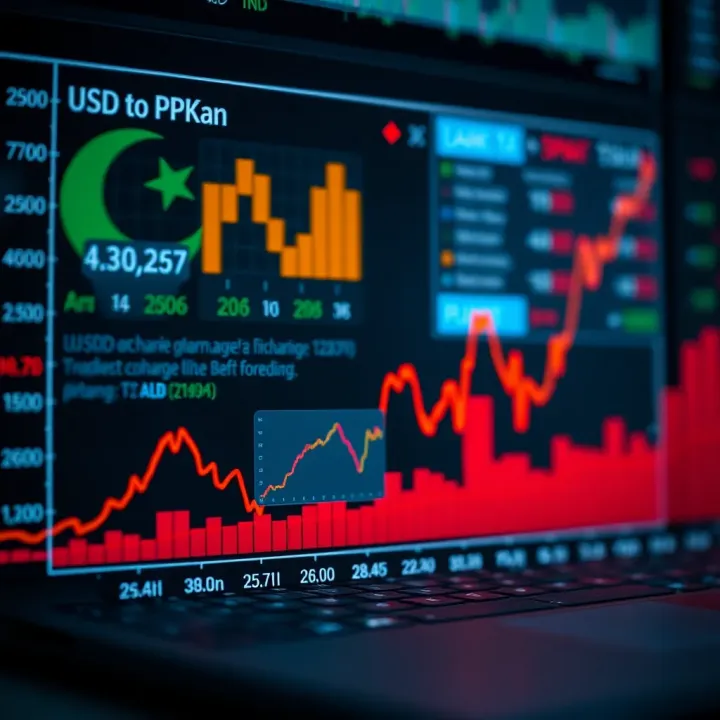
Explore the latest USD to PKR exchange rate trends 📉 and key factors like economic data, political shifts, and market moves affecting your currency decisions 💱.

📊 Get insights on USD to PKR trends, economic factors, and market updates. Stay ahead with forecasts to help businesses and traders in Pakistan.
Based on 9 reviews