
Understanding Forex Trading in Pakistan
Explore 4x trading in Pakistan: basics, risks ⚠️, strategies 📈, top platforms, regulations 📜, and smart tips for beginners starting Forex confidently.
Edited By
Amelia Foster
Forex trading has become a popular way for many Pakistanis to enter the world of international finance. It involves buying and selling currencies in the foreign exchange market to take advantage of price changes. But before you start, it’s key to understand the basics clearly, especially in Pakistan’s unique economic environment.
The forex market is the largest financial market globally, with daily trades worth over $6 trillion. Unlike stock exchanges, forex runs 24 hours a day, five days a week, giving traders ample opportunity to respond to global events. For Pakistani investors, currencies like USD, EUR, GBP, and the Pakistani Rupee (PKR) itself are of direct interest.
Starting forex trading without proper knowledge is like navigating Karachi traffic blindfolded — it only leads to trouble.
Accessibility: You can start trading with as little as a few thousand rupees through local brokers approved by the Securities and Exchange Commission of Pakistan (SECP).
Leverage Options: Forex brokers often offer leverage, letting you control a larger trade size with small capital. But bear in mind, leverage raises both potential profit and risk.
High Liquidity: The forex market’s vast size means you can enter and exit trades easily without waiting.
Currency values fluctuate due to several factors:
Economic Indicators: Pakistan’s inflation rates, GDP growth, trade balances, and interest rate decisions by the State Bank of Pakistan (SBP) influence PKR’s strength.
Political Stability: Uncertainty or changes in government policies can cause sharp swings.
Global Developments: US Federal Reserve announcements or geopolitical events affect currencies like USD and PKR indirectly.
Understanding these will help you interpret price moves rather than guessing blindly.
Pip: The smallest price movement in forex, usually the fourth decimal place.
Lot: The standard size of a forex trade, typically 100,000 units of the base currency.
Spread: The difference between the buy and sell price, representing the broker’s fee.
Getting familiar with these terms will make it easier to follow charts and broker platforms.
The forex market opens several doors for Pakistani beginners if approached carefully. The coming sections will guide you step-by-step on how to start trading safely, manage risks, and avoid common pitfalls.
Understanding how the forex market operates is essential for anyone looking to trade currencies from Pakistan. Forex trading involves buying and selling currency pairs based on their changing exchange rates. This market runs 24 hours a day during weekdays, allowing traders around the world to participate continuously. Knowing how it works helps investors make informed decisions and avoid unnecessary losses.
Forex trading always involves two currencies, called a currency pair. The first currency in the pair is the base currency, and the second is the quote currency. The price of the currency pair shows how much one unit of the base currency is worth in terms of the quote currency. For example, in the USD/PKR pair, the USD is the base currency and PKR (Pakistani Rupee) is the quote currency. If the rate is 285, it means 1 USD equals 285 PKR.
Knowing base and quote currencies helps Pakistani traders understand how currency movements affect their trades. If the PKR strengthens against the USD, the USD/PKR rate will drop, meaning fewer rupees are needed to buy one dollar.
Major currency pairs are the most frequently traded and include pairs like EUR/USD, GBP/USD, and USD/JPY. For Pakistani investors, pairs involving the Pakistani Rupee, such as USD/PKR, EUR/PKR, and GBP/PKR, are highly relevant since these affect import-export businesses, remittances, and local investments. Minor pairs include currencies from emerging markets or less-traded currencies paired without the USD, which usually have wider spreads and more volatility.
The global forex market operates across different time zones in four main trading sessions: Sydney, Tokyo, London, and New York. Each session overlaps partially with others, creating times of higher liquidity and volatility.
For traders in Pakistan (PKT, UTC+5), understanding these market hours is crucial. The London session overlaps with the New York session in the afternoon PKT hours, making it the most active and often the best time to trade. For example, between 3 pm and 7 pm PKT, many major economic announcements from Europe and the US influence price movements.
The Asian session, including Tokyo and Sydney hours, runs late night to early morning in Pakistan and tends to have lower volatility. However, currency pairs involving the Japanese yen or Australian dollar experience more movement during this time. Pakistani traders should align their trading schedules with these sessions based on their preferred currency pairs and risk appetite.
Knowing when the forex market is most active allows you to plan trades to catch more significant price moves and avoid periods of low liquidity that can cause erratic price swings.
By mastering the basics of currency pairs and the global trading hours, Pakistani investors can better navigate the forex market and increase their chances for success.
Learning key forex terms upfront helps beginners avoid confusion and trade with confidence. Knowing what terms mean affects how you read charts, place orders, and manage your risk. Without a clear grip on these terms, it’s easy to get lost in the fast-moving forex market, especially when dealing with volatile pairs like USD/PKR.
A pip stands for "percentage in point" and is the smallest price change a currency pair can make. For most pairs, one pip equals 0.0001. For example, if USD/PKR moves from 285.50 to 285.51, that's a one pip change. Pips help traders measure profit or loss on small price movements. Understanding pips means you can calculate your gains or losses precisely.
A lot is the size of the trade. The standard lot size is 100,000 units of the base currency. But beginners usually start with mini lots (10,000 units) or even micro lots (1,000 units) to manage risk better. For instance, trading one mini lot in USD/PKR means you’re dealing with 10,000 US dollars' worth of Pakistani rupees. Smaller lot sizes mean you can trade with less money and control risk better.
Leverage allows you to control a large position with a small amount of your own money. It’s like borrowing funds from the broker to increase your potential returns. For example, 1:100 leverage lets you control Rs 10 lakh worth of currency by putting down just Rs 100,000.
However, leverage amplifies losses as well. That’s why margin — the actual deposit or collateral required to open a position — is important. Margin is a percentage of your total trade size, and it helps you keep your trades funded. Poor margin management can wipe out your account quickly, especially in a volatile market like forex. Always check the margin requirements on your platform before opening a trade.
Spread is the difference between the buying (ask) and selling (bid) price of a currency pair. For example, if USD/PKR has a bid price of 285.50 and an ask price of 285.52, the spread is 2 pips. Brokers earn their commission through the spread. Tighter spreads mean lower trading costs.
Slippage happens when your order executes at a different price than expected, often during high volatility or low liquidity. Suppose you set a stop-loss at 285.00, but due to a sudden price jump, the order fills at 284.90. This difference can affect your risk and profit, so understanding slippage helps you set realistic targets.
Most brokers provide different account types. A standard account deals with full lot sizes (100,000 units) and is suited for traders with bigger capital. Meanwhile, a mini account offers smaller lot sizes, which is ideal if you’re starting with limited funds or want to test strategies without risking much.
Choosing the right account depends on your budget and risk appetite. For example, with a mini account, you might trade just Rs 1 lakh worth of USD/PKR instead of Rs 10 lakh — easier to manage especially for new traders.
Platforms like MetaTrader 4 (MT4) and MetaTrader 5 (MT5) dominate Pakistan’s forex trading scene due to their reliability and user-friendly interface. These platforms offer charting tools, indicators, and automated trading options.
Local investors also appreciate brokers offering support for deposit and withdrawal through JazzCash and Easypaisa. Platforms that allow easy funds transfer in PKR and support Urdu interfaces tend to be more popular. Always pick a platform regulated and well reviewed in Pakistan to avoid scams and ensure smooth trading.
Understanding these key terms equips you to trade smarter, manage your capital sensibly, and speak the language of forex with confidence from day one.
Understanding what drives forex prices is essential for traders, as it helps them anticipate market moves and make better decisions. Forex prices react to various forces, mostly stemming from economic data, political events, and central bank policies. For Pakistani investors, recognising these factors is practical because it equips them to navigate the PKR exchange environment effectively.
Interest rates and inflation play a vital role in forex price fluctuations. When a country raises interest rates, its currency often strengthens because higher rates attract foreign investors seeking better returns. For example, if the State Bank of Pakistan (SBP) increases its policy rate, the Pakistani rupee (PKR) may appreciate against the US dollar as more inbound capital flows in. Inflation is connected to this since high inflation erodes purchasing power and can prompt central banks to adjust interest rates. So, traders should watch inflation reports closely, as rising inflation might lead SBP to hike rates, affecting PKR exchange rates.
Employment data and GDP reports provide insight into a country’s economic health, influencing currency values. Strong employment numbers generally signal economic growth, which can boost investor confidence and strengthen the currency. Similarly, a robust Gross Domestic Product (GDP) growth rate confirms a healthy economy. For instance, if Pakistan’s quarterly GDP report shows higher growth than expected, it might support PKR's value. Conversely, rising unemployment or sluggish GDP growth often signals economic troubles, leading to currency depreciation. Traders can use Pakistan’s Pakistan Bureau of Statistics reports to track these indicators for timely decisions.
Impact of elections and policy changes can sway forex markets significantly. Elections often bring uncertainty, which makes traders cautious or speculative about currency futures. For example, Pakistani general elections may cause PKR volatility as investors wait for clear policy directions. Similarly, sudden policy changes such as import restrictions, tax reforms, or foreign investment rules affect market sentiment. If the government announces pro-business reforms, PKR might gain strength. On the other hand, political instability or unexpected policy shifts can trigger currency weakness.
Role of central banks is crucial since they control monetary policy and intervene in forex markets to stabilise currency values. The State Bank of Pakistan’s statements and actions, such as buying or selling USD reserves, impact PKR’s exchange rate directly. Central banks also guide markets through interest rate decisions and inflation targeting. For example, when SBP signals cautious optimism about inflation, it reassures traders and can improve market confidence in the PKR. Being alert to SBP press releases and monetary policy reports helps traders anticipate currency trends.
In forex trading, keeping an eye on these economic, political, and institutional factors is like having a weather forecast; it doesn’t guarantee sunny days but helps avoid walking into a storm unprepared.
By tracking these factors, Pakistani investors gain practical insight to trade forex more confidently, responding to real-world data instead of guessing blindly.
Starting forex trading in Pakistan requires careful steps to ensure safety, convenience, and success. Each stage, from choosing a broker to developing a trading strategy, holds practical importance for beginners. Pakistani investors need to consider local regulations, payment methods, and documentation alongside usual trading advice.
Regulation and trustworthiness are the first things to check. A regulated broker ensures your money is protected and the trading environment is fair. In Pakistan, many brokers operate internationally but may not follow local laws, so selecting one registered with credible authorities abroad like FCA (UK) or CySEC (Cyprus) adds confidence. Trustworthy brokers usually provide transparent pricing, good customer support, and realistic trading conditions.
PTA compatibility and deposit options matter a lot in Pakistan. The Pakistan Telecommunication Authority (PTA) regulates internet and telecom, so your broker’s website and app should be accessible without restrictions. Also, brokers offering convenient deposit and withdrawal methods such as JazzCash, Easypaisa, or direct bank transfers make your trading smoother. This avoids delays or extra charges when moving funds.
When opening an account, you must provide required documents such as CNIC (Computerised National Identity Card). This serves to verify your identity and comply with anti-money laundering laws. Some brokers also ask for proof of address like a utility bill. Having these documents ready speeds up the process.
For funding, familiar payment methods including JazzCash and Easypaisa simplify transactions. These local mobile wallets are widely used and trusted in Pakistan, making deposits quick and hassle-free. Plus, some brokers accept bank transfers in PKR, avoiding conversion losses. Always confirm fees and processing times beforehand.
Understanding the difference between technical and fundamental analysis is key. Technical analysis involves studying price charts and patterns to predict future moves — useful for short-term trades. Fundamental analysis looks at economic data like Pakistan’s inflation, interest rates, or political events to gauge longer-term currency trends.
Finally, risk management basics protect your capital. Setting stop-loss orders limits how much you lose per trade, crucial in a volatile market like forex. Start with low leverage since high leverage can wipe out your account quickly, especially when learning. Always trade only with money you can afford to lose.
Starting forex trading in Pakistan involves practical decisions on brokers, payments, strategy, and risk. Each step helps safeguard your investment and improves chances of success while keeping you grounded in local realities.
Forex trading can be rewarding, but it carries risks you need to understand to protect your capital. As a Pakistani investor, recognising these risks and applying practical strategies can save you from significant losses. This section breaks down key challenges like market volatility and leverage, while offering clear tips to trade safely.
Volatility refers to how much and how quickly currency prices move. High volatility means prices change rapidly, which can lead to big profits or steep losses in a short time. Consider the Pakistani rupee (PKR) against the US dollar (USD); political unrest or sudden economic data releases can cause the PKR to swing sharply. For example, when the State Bank of Pakistan announces unexpected policy changes, the market may react with volatile price bursts.
This volatility affects your trades directly — if you enter a position and the price swings wildly against you, your losses can pile up fast. On the other hand, volatility creates opportunities for experienced traders who can predict or react quickly. The key is to prepare for these price movements rather than being caught off guard.
Avoiding emotional trading is crucial during volatile periods. When market prices jump nervously, some traders panic and make rash decisions like closing a trade too early or taking excessive risks, hoping to recover losses quickly. This often leads to poor outcomes. Instead, maintaining a calm and disciplined approach helps you stick to your plan without letting fear or greed control your choices. For instance, if the PKR suddenly dips during a government announcement, resist the urge to close your trades impulsively; wait for your predetermined exit points.
Stop-loss orders are essential tools to limit losses. They automatically close your position once the price hits a level you specify, preventing further damage to your investment. Suppose you buy USD/PKR at Rs 280, expecting it to rise, but the market falls to Rs 275. A stop-loss at Rs 276 triggers an automatic exit, capping your loss. This protects your capital without needing to watch the market constantly, particularly useful given Pakistan's frequent power outages and internet instability.
Leverage allows you to trade larger positions than your actual capital, but it raises risks significantly, especially for beginners. In Pakistan, where many traders use popular platforms like MetaTrader through brokers offering up to 1:100 or higher leverage, this can multiply both profits and losses. For example, with Rs 10,000 and 1:100 leverage, you control Rs 1,000,000 worth of currency. A small adverse move of 1% wipes out your entire capital.
Beginners often underestimate leverage risks and may overtrade, leading to quick losses. It’s wise to start with low leverage, such as 1:10 or less, and increase only when you fully understand market behaviour. Practising on demo accounts before real capital use also helps develop discipline. Remember, managing leverage carefully keeps you in the game longer and reduces stress.
Trading forex is not about quick riches but steady, informed decisions. Knowing your risks and applying controls like stop-losses and cautious leverage are your best allies.
By recognising volatility effects, avoiding emotional pitfalls, and managing leverage wisely, you lay a stronger foundation for your forex trading journey in Pakistan.
Explore 4x trading in Pakistan: basics, risks ⚠️, strategies 📈, top platforms, regulations 📜, and smart tips for beginners starting Forex confidently.
📉 Explore forex trading in Pakistan with practical tips on market basics, proven strategies, risk safeguards, and staying compliant for smart trades.
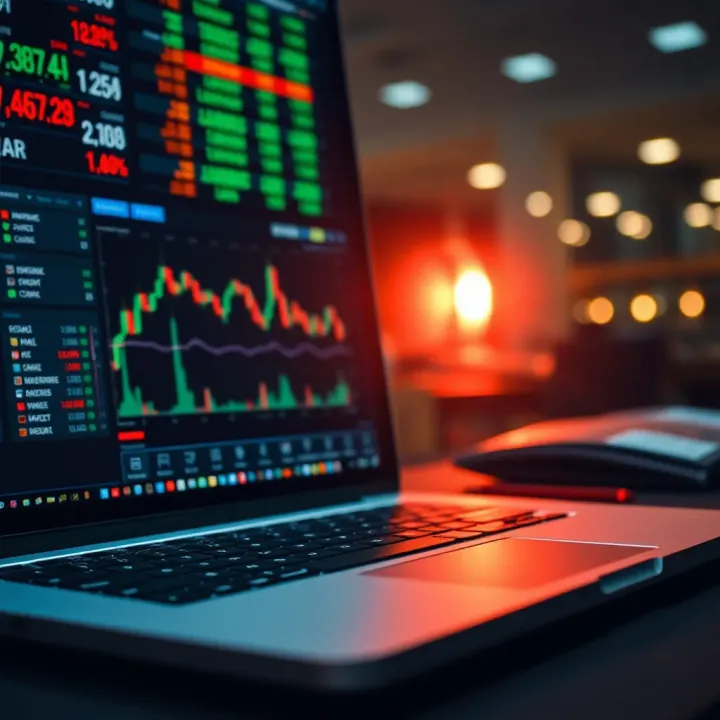
📚 Explore the best trading PDFs for Pakistani traders! Learn how to find reliable resources, master key topics, avoid risks, and trade smarter today.
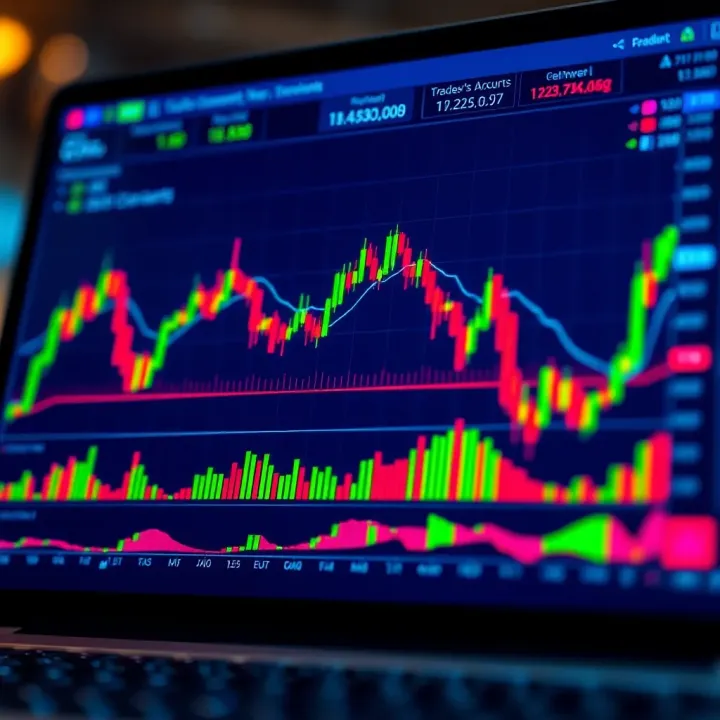
📈 Discover how trading demo accounts help beginners in Pakistan practice risk-free, build skills, and transition smoothly to real trading with confidence.
Based on 6 reviews