
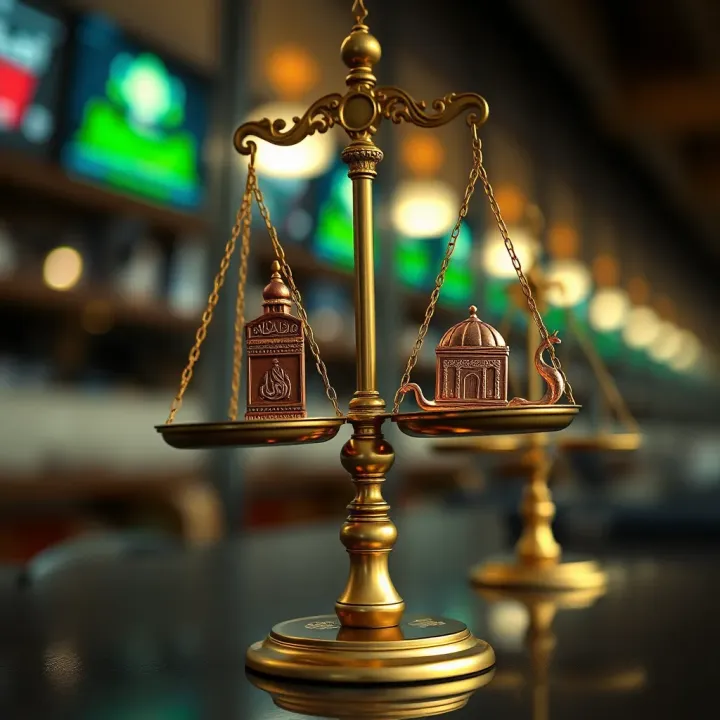
Is Trading Halal or Haram? An Islamic Perspective
Is trading halal or haram? 🤔 Explore Islamic views on trading, key principles, scholar opinions, and practical tips for ethical trading in Pakistan.
Edited By
James Thornton
Forex trading has gained significant popularity in Pakistan, attracting a growing number of investors looking to benefit from currency fluctuations. However, the question of whether engaging in forex trading is halal or haram under Islamic law remains a common concern. This article seeks to provide clarity by examining the principles of Islamic finance relevant to forex trading, reviewing typical market practices, and presenting opinions from respected scholars.
Islamic finance strictly prohibits earning money through interest (riba) and excessive uncertainty or gambling (gharar). Forex trading, by its nature, involves buying one currency against selling another in hopes of making a profit. The controversy arises over whether this speculative aspect introduces gharar or resembles gambling.

Understanding the distinction between halal forex trading and prohibited practices is essential for Pakistani traders aiming to stay compliant with Shariah law.
Some key points to consider include:
Spot Trading vs. Forward Trading: Spot forex, where transactions settle immediately or within two days, is usually considered more acceptable than contracts involving delayed settlement, which may involve interest or uncertainty.
Avoidance of Interest (Riba): Transactions should not involve interest-based components such as rollover fees or swaps charged by brokers overnight.
Intention and Method: Trading should be done with genuine intention to exchange currencies, not merely for speculative gain that resembles gambling.
Pakistani investors should also be aware of brokers operating in compliance with Islamic accounts that exclude interest charges and offer transparent conditions. Besides, consulting with scholars knowledgeable in both Islamic finance and modern trading can provide personalised guidance.
This article will elaborate on these factors, clarify common misconceptions, and offer practical advice to help readers understand when forex trading aligns with halal principles and how to participate responsibly in this fast-moving market.
Understanding the fundamentals of forex trading is essential for anyone considering entering this market, especially within the context of Islamic finance. Many Pakistani traders jump into forex without fully grasping what it entails, which can lead to confusion over its permissibility in Islam. By breaking down the basics, we can better assess the halal or haram aspects later.
Forex trading means buying and selling currencies on a global platform, aiming to make profits from fluctuations in exchange rates. For example, a trader might buy US dollars when the rupee is weak and sell them later when the dollar weakens, hoping to gain from the price difference. This market operates 24 hours a day, every weekday, allowing traders in Pakistan to participate at their convenience.
The forex market works through banks, brokers, and other financial institutions that set currency prices based on supply and demand, global economic conditions, and geopolitical events. Unlike stock exchanges, there is no central marketplace; trades happen electronically over networks. For instance, a Pakistani trader uses an online platform tied to international brokers to buy euros in exchange for rupees. The platform reflects live prices, which change constantly due to factors like oil prices, political stability, and central bank decisions.
It’s crucial to know that forex trading involves real currency exchanges despite its digital nature. This detail affects its classification under Islamic finance rules.
Pakistani traders often engage in forex through online brokers such as FXTM, XM, or local agents, frequently opting for leverage to increase potential returns. Leverage means borrowing funds from the broker to trade larger amounts, which can magnify both profits and losses. Another common practice includes the use of swap or rollover interest fees on positions held overnight, which, as you will see, becomes significant in determining halal compliance. Additionally, many traders prefer accounts labelled as Islamic or swap-free to comply with religious principles.
Understanding these elements forms the foundation for discussing whether forex trading aligns with Islamic teachings. Without clarity on how the markets work and commonly used practices in Pakistan, judging halal or haram aspects remains unclear and speculative.
Islamic finance operates on rules set by Shariah law, which limits certain types of financial activities, especially those involving riba (usury), gharar (excessive uncertainty), and gambling. When it comes to forex trading, understanding these principles is vital. Traders in Pakistan and beyond need clear guidance to ensure their activities align with Islamic law and avoid any aspects considered haram (forbidden). The main areas of focus are the prohibition of riba, the regulation of uncertainty in transactions, and the requirement for immediate exchange.
Riba refers to any guaranteed interest or usury, which Islam strictly forbids. In forex trading, riba usually comes into play through overnight interest charges, commonly known as swaps or rollovers. For instance, if a trader holds a currency position overnight, the broker may charge or pay interest based on the differing interest rates of the two currencies involved. Such interest, being fixed or guaranteed returns without effort, is considered riba and hence, haram.
Pakistani traders often rely on Islamic forex accounts offered by brokers, which do not charge interest. These accounts are structured to comply with Shariah by eliminating swaps and instead may charge a fixed fee or commission unrelated to interest. This setup allows traders to participate in forex trading without falling into the trap of riba.
Gharar means uncertainty or excessive risk in trade. Shariah disallows transactions where the terms, price, or subject matter are unclear or speculative. Forex markets, by nature, can be volatile, but speculation that resembles gambling is definitely frowned upon.
In a practical sense, gharar oversteps its limit when trades are made purely on price speculation without genuine economic activity or real asset exchange. For example, aggressively betting on currency price swings using high leverage without understanding the market may fall under gharar, making it questionable in Islamic terms.
One key condition for halal forex trade is immediate exchange or spot transaction, known as "hand-to-hand" exchange. This means currencies should be traded and delivered instantly to avoid delay and uncertainty. In contrast, transactions promising future delivery or settlement are generally non-compliant with Shariah.
For example, in Pakistan's forex markets, traders must ensure that currency delivery is immediate or within the same session. Delayed settlements invite risk and ambiguity, which are against Islamic principles.
Islamic finance insists that currency exchange should happen without delay and without any hidden or excessive risk, preserving fairness and fulfilment for all parties involved.
Understanding these principles helps traders avoid common pitfalls. By using Shariah-compliant accounts, avoiding interest charges, steering clear of excessive speculation, and insisting on immediate currency exchange, Pakistani investors can engage in forex trading that respects Islamic finance rules. This adherence safeguards both their investments and their faith.
Some Islamic scholars consider forex trading haram based on key Islamic finance principles. They focus on how certain practices in forex involve elements prohibited in Shariah, such as interest (riba), excessive uncertainty (gharar), and gambling (maysir). Understanding these concerns is essential for traders who want to ensure their investments align with Islamic teachings.
One major concern is the role of interest on overnight positions, known as swap or rollover fees in forex trading. Many brokers charge or pay interest depending on the currency pair and holding period. Since Islam forbids earning or paying interest (riba), traders who face these charges violate this fundamental principle. For example, if a Pakistani trader holds a USD/PKR position overnight with a swap charge, this involves paying or receiving interest, leading many scholars to deem such trading impermissible.
Forex trading often involves high speculation, where traders take positions based on price movements rather than genuine needs for currency exchange. This speculation resembles gambling (maysir), which Islam explicitly prohibits. Quick profitable trades based on uncertain future market conditions, without real economic activity or asset possession, raise red flags. Consider a scenario where a trader bets on short-term fluctuations of USD/Euro without intending to use the actual currencies—this behaviour can be seen as gambling.
Islamic law requires currency exchange transactions to be settled immediately, known as spot transactions. However, many forex trades are settled later or only on paper through contracts, not actual instant currency exchange. Delayed settlements increase uncertainty (gharar), making the transaction non-compliant with Islamic standards. For instance, if the currency transfer happens days after the trade agreement, scholars often view it as invalid.
These objections highlight the need for careful scrutiny of trading practices. Avoiding interest, limiting speculation, and ensuring prompt settlements can help align forex investments with Islamic principles.
To navigate these issues, Pakistani traders can opt for Shariah-compliant forex accounts offered by certain brokers where interest fees are absent, and trades happen with immediate real exchange. Understanding these challenges enables more informed and responsible trading decisions within the boundaries of Islamic finance.
Forex trading can be halal if certain conditions are strictly observed. These conditions seek to align trading activities with Islamic finance principles, mainly avoiding interest (riba), cheating, and excessive uncertainty (gharar). Understanding these conditions not only helps traders comply with Shariah but also safeguards investments from unethical practices common in speculative forex markets.
Interest or riba is completely prohibited in Islam. Conventional forex brokers often charge interest on overnight positions, called swaps. To maintain halal trading, traders must use Shariah-compliant accounts that waive these interest fees. These accounts are designed to eliminate swaps or convert them into administrative fees not linked to riba.
In Pakistan, brokers like Alpari and IFC Markets offer Islamic accounts matching these criteria. This means you can hold positions overnight without incurring haram interest, making your trading activity permissible. It's vital to verify broker certification to avoid hidden interest charges.
Islamic principles require immediate exchange (qabdh) when trading currencies. This means both parties must deliver the currencies on the spot without delay. In traditional forex markets, trades might settle days later, breaching this condition.
To keep forex trading halal, transactions must be spot trades where delivery happens immediately. This ensures the trade is a genuine exchange, not a deferred or speculative contract. Many Islamic scholars consider spot forex trading acceptable if delivery and payment occur simultaneously.
Practically, Pakistani traders should insist on trading currency pairs that settle immediately rather than futures or contract-for-differences which often involve deferred settlement.
Forex should involve trading actual currencies rather than speculative bets on price movement. Trading dubious currency pairs or engaging in high-cost leveraged trades resembles gambling, which Islam prohibits.
For halal forex trading, you should focus on genuine currency pairs like US Dollar to Pakistani Rupee (USD/PKR) or Euro to US Dollar (EUR/USD), where the intent is exchange rather than speculation. Leveraging should be used cautiously, as excessive leverage increases risk and closer resembles a gambling mindset.
Traders must differentiate between genuine trade and pure speculation. True forex trading under Shariah means exchanging currencies for practical needs or investment, not gambling on price swings.
By observing these conditions — using swap-free accounts, ensuring immediate delivery, and trading real currency pairs with responsible leverage — Pakistani forex traders can keep their activities within halal boundaries. This cautious approach protects both faith and finances in a market often viewed with suspicion under Islamic law.
Understanding the views of well-known Islamic scholars and financial bodies helps clarify whether forex trading aligns with Shariah principles. Their opinions offer investors in Pakistan practical guidance by addressing complex areas such as interest (riba), speculation, and transaction timing. Given the debates around forex, these insights provide much-needed clarity for making informed trading decisions.
Pakistani scholars present a range of perspectives about forex trading’s permissibility. Many, including respected figures in madrassas and universities, warn against forex involving interest-based swaps and speculative dealing. They argue that such practices contradict the clear Islamic prohibition of riba and gharar (excessive uncertainty). For example, some scholars highlight that regular rollover charges in conventional accounts create impermissible interest, rendering trading with typical forex brokers haram.
However, Pakistan’s Islamic finance community also recognises that forex can be halal if certain conditions are met. Scholars from institutions like Jamia Ashrafia and International Islamic University Islamabad stress immediate currency delivery without delay and forbidding interest charges in trading accounts. They recommend using Shariah-compliant forex brokers that eliminate swap fees and clearly avoid gambling-like speculation.
These nuanced views reflect the lived realities of Pakistani investors seeking shariah-compliant pathways while still engaging in global markets. Traders here are advised to consult credible scholars and avoid platforms that mix conventional finance practices with forex trading.
International Islamic finance institutions provide frameworks to assess forex trading under Shariah rules more systematically. The Accounting and Auditing Organisation for Islamic Financial Institutions (AAOIFI) sets standards widely followed by Islamic banks and brokers. AAOIFI emphasises the importance of spot transactions with immediate delivery and prohibits interest-based transactions in currency trading.
Similarly, the Islamic Financial Services Board (IFSB) advises member institutions to avoid gharar and elements of gambling in forex. Their guidelines encourage comprehensive shariah compliance reviews for forex products, ensuring no interest or excessive uncertainty remains. These standards help Islamic financial entities worldwide, including those serving Pakistani clients, design products that reconcile forex trading with Shariah.
These international positions act as benchmarks for Pakistani traders seeking legitimacy and compliance. Choosing forex brokers or Islamic finance firms that adhere to these bodies’ guidelines adds a layer of assurance about halal practices.
Relying on the opinions of both local scholars and international bodies empowers Pakistani investors to navigate forex trading responsibly while respecting Islamic principles.
In brief, the combined insights from Pakistani scholars and global Islamic finance institutions highlight that forex trading is not outright haram, but demands careful attention to conditions like no interest charges, immediate settlement, and avoidance of speculative gambling. This balanced understanding supports conscious, shariah-compliant trading within Pakistan’s growing forex market.
Navigating forex trading in Pakistan requires a clear understanding of both market dynamics and Islamic finance principles. Practical guidance helps traders avoid pitfalls that could render their trading haram and ensures they engage in lawful and ethical financial activity. This approach not only protects one’s investment but also aligns trading practices with Islamic teachings.
Selecting a forex broker compliant with Islamic principles is a critical first step. A certified Islamic forex broker offers accounts that avoid interest (riba) through so-called swap-free accounts. These accounts do not charge overnight interest on open positions, which is often considered haram.
For example, a Pakistani trader should look for brokers recognised by reputable Islamic finance bodies or those who prominently advertise their Shariah compliance. Some brokers even provide documentation or fatwas supporting their service model. It's essential to verify that these brokers are regulated by respected financial authorities, ideally with an office or licensing in countries with strong Islamic finance sectors. This safeguards the trader from unethical practices and ensures their funds are secure.
Before committing capital to forex trading, Pakistani investors must evaluate multiple factors carefully:
Understand Market Risks: Forex trading involves significant risks due to market volatility. Being aware helps prevent impulsive decisions that can cause losses.
Confirm Immediate Settlement: Ensure the broker executes spot transactions without delay. Deferred delivery can conflict with Islamic rules around currency exchange.
Avoid Excessive Speculation: Trading should be based on genuine analysis and not resemble gambling. Speculative practices increase the chance of non-Shariah-compliant behaviour.
Check Broker Credentials: Verify the broker’s licensing, customer feedback, and how transparent they are with fees and charges.
Start Small and Learn: New traders should begin with minimal funds and use demo accounts provided by brokers to practice.
Traders often overlook these points and later face financial or religious concerns. Careful preparation and informed choices make a noticeable difference.
In Pakistan, platforms like HBL's or MCB’s brokerage services sometimes offer Islamic-compliant forex options, which can be a reliable avenue for investors looking to remain within Shariah boundaries. Understanding these practical aspects ensures trading activity respects Islamic law and safeguards traders’ financial well-being.
Is trading halal or haram? 🤔 Explore Islamic views on trading, key principles, scholar opinions, and practical tips for ethical trading in Pakistan.
Explore 4x trading in Pakistan: basics, risks ⚠️, strategies 📈, top platforms, regulations 📜, and smart tips for beginners starting Forex confidently.
Explore the best forex trading apps in Pakistan 🇵🇰! Compare features, security, and tools to find the perfect fit for your trading style and needs 📱💹.
📉 Explore forex trading in Pakistan with practical tips on market basics, proven strategies, risk safeguards, and staying compliant for smart trades.
Based on 13 reviews