
Understanding Forex Trading in Pakistan
Explore 4x trading in Pakistan: basics, risks ⚠️, strategies 📈, top platforms, regulations 📜, and smart tips for beginners starting Forex confidently.
Edited By
Sophia Mitchell
Online forex trading has gained traction among Pakistani traders as a way to engage with global financial markets using digital platforms. Unlike traditional currency exchange, forex trading involves buying and selling currency pairs like USD/PKR or EUR/USD, aiming to profit from fluctuations in exchange rates.
Traders operate through online platforms provided by brokers authorised by international or local regulators. These platforms allow instant execution of trades, offering access to major currency pairs as well as exotic ones. For example, a trader in Lahore might buy USD against PKR expecting the dollar to strengthen, aiming to sell later at a higher rate.
With limited investment options locally and the global reach of currencies, forex trading offers accessibility that traditional investments might lack. Mobile connectivity improvements and platforms like MetaTrader have lowered entry barriers, making it possible to trade from home or even on the move.
Volatility: Currency markets can be highly volatile. Traders must ensure they understand market behaviour before risking capital.
Leverage: Online brokers often offer leverage, allowing traders to control larger positions with smaller capital. While this can increase profits, it also amplifies losses.
Regulation: The State Bank of Pakistan restricts direct forex trading for speculation purposes, making Pakistani traders reliant on overseas brokers, which adds regulatory and legal considerations.
New traders should approach online forex only after thorough research and preferably starting with demo accounts to grasp platform mechanics and trading strategies.
Imagine a Karachi-based trader using a MetaTrader platform linked to an international broker. They analyse trends of USD/PKR, monitor geopolitical news affecting the dollar, and place a trade predicting the rupee will weaken. By closing the trade at a favourable rate, they make a profit. Conversely, unexpected political developments or market shocks can quickly turn a gain into a loss, underlining the need for strong risk management.
In short, online forex trading offers Pakistani traders global market access but requires careful study, understanding of risks, and adherence to good trading discipline.
Understanding how online forex trading works is essential for anyone looking to enter this market. Knowing the mechanics helps traders make informed decisions, manage risk better, and make the most of trading opportunities. For Pakistani traders, grasping these basics can also help navigate local challenges such as timing and platform choice.
Forex trading involves buying one currency and selling another at the same time. These two currencies form a currency pair, such as USD/PKR (US Dollar to Pakistani Rupee) or EUR/USD (Euro to US Dollar). The first currency is the base, and the second is the quote currency. The price shows how much of the quote currency is needed to buy one unit of the base currency.
For example, if EUR/USD is quoted as 1.10, it means one euro costs 1.10 US dollars. This helps traders speculate on whether the euro will strengthen or weaken against the dollar. For Pakistani traders, pairs involving PKR are common but often less liquid; major global pairs tend to have better spreads and volume.
In any forex quote, you will see two prices: the bid and the ask. The bid price is the highest price a buyer is willing to pay for a currency pair, while the ask price is the lowest price a seller is willing to accept. The difference between them is the spread, which is basically the cost of trading.
For instance, if USD/PKR shows a bid of 285.50 and an ask of 285.70, the spread is 0.20 PKR. Traders pay this spread indirectly, so smaller spreads are better, especially for active traders. Understanding this helps in choosing brokers and timing trades, as spreads can widen during volatile times.
Leverage lets traders control larger positions with a smaller amount of capital. For example, a leverage of 1:100 means you can control Rs 100,000 with just Rs 1,000. This can amplify profits but also increases risk.
In Pakistan, many brokers offer varied leverage levels, but it’s critical to use leverage cautiously. Even small market moves can lead to big losses if leverage is too high. Proper risk management and understanding margin requirements are key to avoiding margin calls and forced liquidations.
The forex market operates 24 hours a day, five days a week, across four major trading sessions: Sydney, Tokyo, London, and New York. This continuous cycle allows traders to respond to news and events worldwide.
Pakistani traders working during regular office hours find the London and New York sessions most active and relevant, as they overlap with Pakistan Standard Time in the afternoon and evening, offering higher liquidity and tighter spreads.
Overlapping trading sessions often show increased market activity. For example, the London-New York overlap (approximately 1:30 pm to 5:30 pm PKT) is the most volatile and liquid period.
During these overlaps, price movements can be sharper, creating more opportunities for short-term trades. However, this volatility can also lead to sudden losses, so traders should act carefully and avoid overtrading during these hours.
Choosing the best time to trade depends on your strategy. For Pakistani traders, the London and New York sessions offer the best chances for trading major pairs due to higher volume. Early morning hours (Sydney and Tokyo sessions) tend to be slower but may suit longer-term strategies.
Understanding when markets are active helps avoid periods of low liquidity, which can result in wider spreads and slippage, raising trading costs. Many traders find it practical to focus trading hours around session overlaps for better execution and price movements.
Knowing how online forex trading works — from currency pairs to trading hours — builds the foundation for confident decisions and better risk control in a market that never sleeps.
Selecting the right forex trading platform is a key decision for any trader in Pakistan, acting as the gateway to the online forex market. The platform affects how easily you can place trades, analyse market data, and manage your account. A suitable platform offers practical benefits like reliability, user-friendly navigation, and the tools you need. Given the sheer number of options out there, focusing on trusted platforms that align with your trading style and technical needs is essential.
MetaTrader 4 and 5: MetaTrader 4 (MT4) still holds a strong position among Pakistani traders because of its straightforward interface and reliable trading functions. It's particularly popular for forex trading due to its customizable charting tools and the ability to run automated scripts (Expert Advisors) for trades. MT5 is the newer version, providing more assets to trade beyond forex, better analysis tools, and faster order execution, though some traders find MT4's simplicity more suited to their needs. Brokers operating in Pakistan often offer both, allowing traders to pick what suits them best.
cTrader and Other Alternatives: cTrader is gaining attention for its modern interface and advanced order execution features. It appeals to experienced traders because of its level II pricing, which shows market depth, and extensive charting with a range of indicators. Other alternatives include platforms like NinjaTrader or TradingView, which provide powerful charting and social trading functionalities. Pakistani traders might explore these if they feel restricted by traditional platforms or seek advanced analysis capabilities.
Mobile Trading Apps: Trading via mobile apps has become essential, especially in Pakistan where many rely on mobile devices. Platforms like MetaTrader offer apps that mirror desktop features, allowing you to monitor price movements, place orders, and manage risk anywhere. User-friendly mobile apps from brokers such as HBL or UBL simplify fund deposits and withdrawals, making it convenient for traders managing accounts on the go. A reliable mobile app ensures you won’t miss chances during volatile sessions caused by global and local events.
User Interface and Ease of Use: A clean and intuitive user interface reduces the learning curve, helping you focus on trading rather than struggling with the software. Particularly for new traders, a clutter-free workspace that shows essential information without extra noise enhances decision-making speed. Switching between chart views, placing orders, and account management should be straightforward, or else the experience can become frustrating, leading to missed opportunities.
Charting and Analysis Tools: In forex trading, charting is your window into market behaviour. Quality platforms come equipped with multiple chart styles, timeframes, and technical indicators like RSI, MACD, and Bollinger Bands. Some even allow you to add custom indicators or script your own strategies. Without robust analysis tools, spotting trends, support, or resistance levels becomes guesswork. Pakistani traders often use these to time entry and exit points, which can make a difference in profits.
Order Execution Speed and Spreads: The speed at which your orders execute is vital, especially during volatile market moves around major news or announcements. Slow order fills or high slippage can erode gains or increase losses. Also, spreads—the difference between buy and sell prices—directly impact trading costs. Lower spreads improve profitability, especially for day traders or scalpers who make multiple trades daily. Checking broker reviews and testing platforms in demo accounts can help you identify those offering competitive spreads and reliable execution.
Choosing the right forex trading platform balances ease, powerful tools, and reliable execution, making it the foundation of successful trading in Pakistan's fast-moving currency market.
Managing risks effectively is essential for any trader aiming to stay afloat in forex markets, especially in Pakistan where currency fluctuations often reflect domestic and global pressures. Forex trading involves significant uncertainty, so without a solid risk management plan, losses can escalate quickly. Practising risk control protects your capital and helps you make more measured, disciplined decisions instead of impulsive trades driven by emotions.
Currency prices shift constantly because of many factors, including economic data releases, geopolitical events, central bank policies, and even market rumours. For example, a sudden change in Pakistan’s monetary policy by the State Bank of Pakistan or political instability can sharply influence the Pakistani rupee against the US dollar. Global factors like crude oil price swings or US Fed interest rates also play a role.
This ongoing price movement is called volatility. High volatility means currency rates swing widely in short periods, creating both risk and opportunity. For Pakistani traders, times of high volatility can improve profit chances but also increase potential losses if trades go wrong. For instance, volatile conditions during major announcements, like the annual budget or foreign reserve updates, can cause unexpected price jumps.
Because of volatility, traders should not blindly follow trends but instead prepare for rapid changes. Those who understand how volatility affects markets are better equipped to choose when to enter or exit trades, avoiding big losses during unstable periods.
Setting stop-loss and take-profit levels forms the backbone of practical risk control. A stop-loss order automatically closes a trade if the price moves against you beyond a certain point. This limits losses and prevents the position from eating into your whole trading account. On the other hand, a take-profit order secures your gains by closing the trade once it hits a target profit. For example, a trader betting on PKR/USD reaching 280 might set a take-profit at 280.50 so profits lock in before any reversal.
Position sizing and leverage management are equally important. Leverage lets you control a large position with a small amount of capital, but it magnifies both gains and losses. Pakistani brokers often offer high leverage ratios, sometimes up to 1:500, which can be tempting for traders with limited funds. However, using excessive leverage is risky—losing trades can wipe your account fast.
Proper position sizing means adjusting how much of your capital you expose on each trade, usually a small percentage (1-2%). This way, even a few losing trades won’t drain your funds. Combining sensible position sizes with moderate leverage helps maintain control and keeps you in the game longer.
Effective risk management isn’t just about limiting losses; it’s about creating a sustainable trading approach that protects your capital and allows you to benefit from market moves confidently.
By understanding volatility and managing risks carefully, Pakistani traders can navigate the forex market with steadier nerves and better chances for long-term success.
Understanding the regulatory landscape is critical for anyone trading forex online in Pakistan. Regulations provide a legal framework that ensures fair practices, protects traders’ funds, and helps maintain market integrity. For Pakistani traders, being aware of these rules helps avoid unlicensed brokers and potential scams, ultimately guiding them towards more secure trading decisions.
The Securities and Exchange Commission of Pakistan (SECP) oversees the financial markets, including forex trading. Although forex trading with foreign brokers is common, SECP emphasises that any broker operating locally or soliciting Pakistani clients must be licensed. This regulation aims to safeguard traders from unregulated entities and promote transparency in operations.
Broker licensing ensures compliance with specific financial standards and operational guidelines. It acts as a stamp of legitimacy, indicating that the broker maintains minimum capital requirements, segregates client funds, and follows proper reporting practices. For example, a licensed broker must provide clear terms on leverage and trading risks, preventing potential misuse of traders' investments.
Forex scams persist worldwide, and Pakistan is not immune. Common frauds include bogus brokers promising unrealistic returns or hiding fees in the fine print. Some may manipulate trading platforms, making it nearly impossible to withdraw funds once deposited. Traders can fall victim due to lack of due diligence or high-pressure sales tactics.
Verifying a broker’s credibility starts with checking SECP’s official list of licensed brokers. Besides licensing, Pakistani traders should look for global recognitions, such as regulation by the Financial Conduct Authority (FCA) or the Australian Securities and Investments Commission (ASIC). Also, checking user reviews and avoiding brokers that guarantee profits or ask for sizeable deposits upfront helps reduce risks.
Always remember, a legitimate broker will have transparent contact details and customer support. If communication feels vague or evasive, be cautious.
Starting your forex journey without practical guidance can lead to costly mistakes. This section offers grounded tips tailored to Pakistani traders, enabling safer and more informed decisions. Focusing on demo accounts, analysis basics, and budget management, it covers the essentials to kick off trading responsibly.
Using a demo account helps you practice trading without risking real money. Many platforms like MetaTrader 4 offer demo accounts that mirror live market conditions closely, allowing you to understand order types, chart navigation, and execution speed. This risk-free environment builds confidence and sharpens skills, which is important before you commit your hard-earned savings.
Transitioning from a demo to a live account requires cautious steps. Start small and avoid the temptation of large trades just because you performed well on demo. The emotional impact of real money trades is different—it can affect your decisions and risk tolerance. Gradually increasing your stakes while sticking to a trading plan helps manage stress and protects your capital.
Economic calendars listing events like interest rate decisions by the State Bank or US non-farm payroll reports matter a lot in forex trading. Pakistani traders should monitor such calendars to anticipate volatility and plan trades accordingly. Missing these can lead to unexpected market moves, which can be costly.
Reading charts and using indicators like moving averages, RSI, and MACD form the core of technical analysis. These tools identify price trends, entry, and exit points. For example, spotting a bullish crossover in a moving average on the USD/PKR pair could signal a buying opportunity. Mastering chart reading takes time but pays off with better timing and higher confidence.
Setting realistic limits means deciding beforehand how much money you want to invest without endangering your financial stability. Many Pakistani beginners start with Rs 50,000 or less to limit downside and learn the ropes. It’s wise to treat this as an education expense rather than a quick way to earn money.
Avoiding overexposure is key to surviving volatile markets. Never put all your funds in one trade or use maximum leverage constantly. Spreading your capital across different trades or keeping reserved funds can prevent major losses. For instance, if you have Rs 100,000, risking 2-3% per trade allows you to stay in the game longer and reduce emotional trading mistakes.
Practical, disciplined habits protect you from common forex pitfalls. Starting small, learning analysis skills, and cautious budgeting form the foundation of successful trading in Pakistan.
Explore 4x trading in Pakistan: basics, risks ⚠️, strategies 📈, top platforms, regulations 📜, and smart tips for beginners starting Forex confidently.
📈 Learn how to pick the best online trading platform in Pakistan 🇵🇰. Explore features, fees, regulations, and tips for safer, smarter investing.
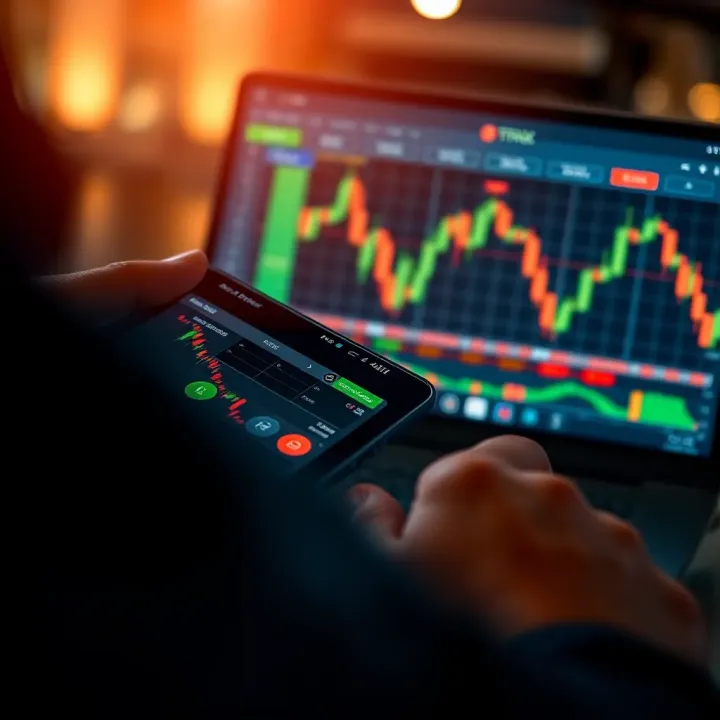
Explore the best forex trading apps in Pakistan 🇵🇰! Compare features, security, and tools to find the perfect fit for your trading style and needs 📱💹.
🔍 Find the best online trading app in Pakistan! Compare features, costs, security, and user experience to make smart trading decisions today 📈💡
Based on 14 reviews