
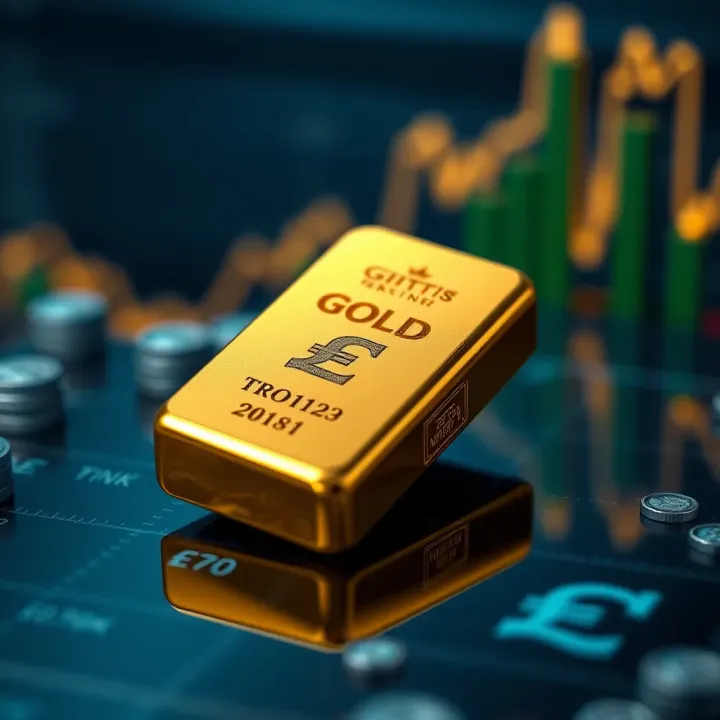
Gold Price Forecast in Pakistan: Trends and Insights
📈 Discover how economic trends, market demand, and geopolitical events shape gold prices in Pakistan. Get insights on what investors and consumers should expect soon.
Edited By
Edward Hughes
Gold has always held a special place in Pakistan’s economy and culture. From weddings to investments, it remains a popular asset for preserving wealth. Predicting gold prices here is a complex task because it depends on both global patterns and local factors unique to Pakistan.
The price of gold in Pakistan is influenced by several main elements:

Global gold prices: Pakistan largely follows international gold rates quoted in US dollars, which in turn respond to global economic conditions, geopolitical tensions, and currency fluctuations.
US Dollar to Pakistani Rupee exchange rate: Since gold is priced globally in dollars, the rupee’s strength or weakness directly affects gold prices in Pakistani Rupees (Rs).
Local demand and supply: Seasonal demand spikes, especially around Eid and wedding seasons, push prices higher. On the supply side, jewellers and mines impact availability.
Government policies and taxes: Duties, GST, and import regulations can alter gold’s final cost in the market.
Tracking the intersection of these factors offers the best insight into where gold prices in Pakistan might head next.
Inflation rate: Rising inflation usually leads investors toward gold as a safeguard.
Interest rates set by the State Bank of Pakistan (SBP): Higher rates can reduce gold’s appeal because fixed-income returns become more attractive.
Political stability and security: Uncertainties here often push investors into precious metals.
Monitor rupee fluctuations relative to the US dollar daily, as even small movements can change investment costs.
Familiarise with global market trends via London Bullion Market Association (LBMA) rates but adjust expectations based on local import duties and taxes.
Consider timing purchases around seasonal demand peaks to avoid paying inflated prices.
Understanding these elements helps traders, analysts, and investors make informed decisions. While no prediction can be guaranteed, blending global insights with local realities gives the clearest possible picture of future gold price trends in Pakistan.
Understanding the gold market in Pakistan is key for anyone looking to predict gold prices or make informed investment decisions. Gold plays a multi-dimensional role here—not only as a store of value but also as a cultural asset and a hedge against inflation. This section helps traders, investors, and analysts grasp the fundamentals before diving into price predictions.
Gold prices in Pakistan have seen significant ups and downs over the decades, often influenced by global crises and local economic events. For instance, during times of political instability like the 2008 financial crisis or the rupee's sharp depreciation in 2018, gold prices surged sharply as investors sought safety. Similarly, the pandemic in 2020 caused gold prices to spike, reflecting global uncertainty. Understanding these historical spikes allows investors to anticipate how current or future stressors might impact prices.
Pakistan's gold price trends generally move in tandem with neighbouring countries like India and Bangladesh, whose markets are also affected by regional demand and supply. Yet differences arise due to variations in import duties, currency fluctuations, and local demand. For example, India’s gold prices often set a baseline due to its massive market size, but Pakistan's prices may carry premiums or discounts based on exchange rate dynamics or government tax policies. Comparing these markets helps in understanding price deviations and arbitrage opportunities.
In Pakistan, many households consider gold a safer form of savings particularly during times of currency weakness and inflation. Unlike bank deposits, gold provides a tangible asset that generally protects wealth over time. This is especially true in rural areas where the informal economy thrives. For example, during high inflation phases, families convert small amounts of cash savings into gold jewellery or coins as a safeguard for their future. Recognising this behaviour aids investors in forecasting demand cycles.
Gold carries deep cultural roots in Pakistan. It is a traditional gift during weddings, festivals like Eid, and family milestones. This cultural demand creates steady buying patterns that often peak during certain seasons. For instance, before Eid ul-Fitr and wedding seasons, Karachi and Lahore jewellery markets witness a noticeable surge in gold purchases, pushing prices up. This demand isn't just sentimental but also reflects socio-economic trends where rising incomes boost jewellery shifts. Analysts factoring this cultural context gain a fuller picture of domestic gold demand.
In sum, viewing the gold market through historical, regional, economic, and cultural lenses equips investors with a balanced understanding that goes beyond just price charts.
Pakistan’s gold price volatility often mirrors political and economic developments.
Regional price comparisons clarify local market nuances.
Cultural customs strongly influence buying patterns.
Investment motives are linked closely with currency and inflation outlook.
This overview lays the foundation for deeper analysis in upcoming sections on factors influencing gold prices and prediction methods.
Understanding the factors influencing gold prices in Pakistan is vital for traders, investors, and analysts to navigate the market effectively. These factors range from domestic economic indicators to global events and government policies, each playing a distinct role in shaping gold's value locally. Recognising these helps investors make informed decisions, especially in a market where price swings are frequent.
Inflation affects gold prices directly as rising inflation erodes the purchasing power of the Pakistani rupee (PKR). When inflation rates climb, investors often turn to gold as a safeguard, pushing up demand and prices. For example, if consumer price inflation in Pakistan rises above 10%, savers might prefer gold over fixed deposits or savings accounts, anticipating their money will retain value better.
Pakistan has experienced fluctuating inflation rates in recent years, and each spike typically triggers a surge in gold buying. This happens because gold does not depreciate like paper currency, so it acts as a hedge against inflation. Importantly, inflation also diminishes spending power, which means fewer people can afford jewellery, sometimes tempering demand on that front.
Given gold is priced internationally in US dollars, the PKR–USD exchange rate has a significant impact on local prices. When the rupee weakens against the dollar, gold becomes more expensive in Pakistan, even if global gold prices remain stable. For instance, a 5% depreciation in PKR against USD can translate into a comparable increase in domestic gold prices.
This dynamic influences both investors and consumers. For traders, a falling rupee signals potential price hikes, encouraging earlier purchases. Conversely, currency stability or appreciation often cools the demand slightly, since gold becomes relatively cheaper to import and buy. The volatility of the PKR in recent years makes this an essential factor to watch closely.
Global gold prices set the baseline for Pakistan's market rates, influenced by factors like global demand, central bank purchases, and economic uncertainty worldwide. When prices rise on international markets—gold crossed $2,000 per troy ounce level during recent geopolitical tensions—Pakistani gold prices follow suit after factoring in local costs and exchange rates.
These international price trends are essential for local investors to monitor. A surge in global demand, such as during economic downturns or inflation fears in major economies, often causes a ripple effect, pushing Pakistani prices higher. Thus, understanding global market cycles can help traders anticipate local movements.
Geopolitical tensions, such as conflicts in the Middle East or trade disputes between major countries, create uncertainty that drives investors towards safe-haven assets like gold. In such periods, global gold prices typically spike.
Additionally, the US dollar's strength affects gold prices inversely. A stronger dollar raises the cost of gold for holders of other currencies, usually causing global prices to drop slightly. Since Pakistan’s rupee is often volatile against the dollar, these shifts impact gold trading margins and timing decisions within the local market.
Traders should watch global news and US dollar movements closely as these often give early signals for gold price changes in Pakistan.
Pakistan levies significant import duties and taxes on gold, influencing its retail price significantly. High customs duties—often in the range of 10-15%—increase the local cost beyond the global price plus currency conversion. For example, when the government raises import duties, jewellers and traders pass on the extra costs, causing price jumps.
These policies can either discourage imports or shift demand to alternative investment forms like gold certificates or jewellery already in the market. Investors must factor in these added costs when timing their buying or selling decisions, as sudden changes can quickly affect profitability.
The State Bank of Pakistan’s (SBP) monetary policies—especially interest rate adjustments—also impact gold demand. When SBP raises rates to control inflation, fixed-income investments become more attractive, potentially lowering immediate gold demand. Conversely, low interest rates often drive savers towards gold for better returns.
Furthermore, SBP’s foreign exchange reserves and interventions influence the PKR strength, indirectly affecting gold prices. Market participants watch SBP signals closely to anticipate how these policy moves could alter gold investment attractiveness in Pakistan.
In short, government actions around taxation and monetary policy set the broader environment within which gold prices fluctuate locally, making them key areas for investors to monitor.
Predicting gold prices in Pakistan requires a mix of techniques that consider both historical data and current economic conditions. Understanding these methods helps traders, investors, and analysts anticipate market movements more accurately and make informed decisions.
Chart patterns and historical price data provide a visual way to interpret past market behaviour, which can suggest future trends. By studying charts, investors notice recurring formations—like "head and shoulders" or "double tops"—that often signal price reversals or continuations. For instance, if gold prices in Karachi show a consistent pattern before Eid due to increased jewellery buying, this pattern can guide traders on when to enter or exit. Historical data acts as a reference point, exposing support and resistance levels unique to the Pakistani market.
Trend lines and moving averages help smooth out price fluctuations and highlight overall direction. A trend line drawn below rising gold prices signals an uptrend, which suggests sustained buying interest. Moving averages, like the 50-day or 200-day average, facilitate spotting shifts; for example, when the short-term average crosses above the long-term, it may signal a bullish phase. In Pakistan, these tools are valuable during periods of currency volatility, where technical indicators often reveal early warning signs ahead of broader economic shifts.
Using economic indicators to forecast prices involves examining factors like inflation rates, currency exchange levels, and interest rates in Pakistan. High inflation typically boosts gold’s appeal as a hedge, pushing prices up. Similarly, when the Pakistani rupee weakens against the US dollar, gold prices tend to rise in local currency terms. Analysts monitor the State Bank of Pakistan's policy moves closely as changes in interest rates influence gold's relative attractiveness compared to fixed-income options.
Global supply-demand dynamics play a significant role too. The world’s total gold production, central bank purchases, and jewellery demand, especially from countries like India and China, impact prices globally. Any disruption in these can affect Pakistan’s gold market. For example, if geopolitical tensions reduce mine output or cause investor uncertainty, gold prices usually rise. Pakistan’s import costs also depend on these global trends, affecting local prices accordingly.
Combining technical and fundamental analysis provides a balanced view, enabling investors to navigate Pakistan’s gold market effectively while accounting for both market sentiment and economic realities.
This dual approach remains essential for anticipating price shifts, whether you are a short-term trader or a long-term investor in Pakistan’s gold market.
Understanding expected trends in gold prices helps investors and traders make informed decisions. This section highlights factors that influence short-term price movements and long-term outlooks, especially within the unique Pakistani economic and cultural landscape. By examining seasonal patterns and policy changes alongside broader economic indicators, one can anticipate price shifts and manage risks better.
Seasonal demand during festivals and weddings plays a significant role in Pakistan’s gold price fluctuations. Demand typically surges during months leading up to Eid and the wedding season in winter. For example, in December and January, many families invest heavily in gold jewellery, which can push prices slightly higher due to increased market demand. Traders and investors should keep an eye on these periods as buying activity spikes, sometimes temporarily stretching local premiums above international gold rates.
The surge also impacts local jewellers who stock up months in advance anticipating higher sales volumes. Awareness of this trend can aid investors in timing purchases to avoid premium-heavy periods or capitalise on selling at peaks.
Recent policy changes affecting price have also influenced gold's market behaviour. For instance, the Federal Board of Revenue’s (FBR) adjustments to import duties have a direct impact on gold costs domestically. When import levies increase, retail gold prices often rise to compensate, especially given Pakistan’s heavy reliance on imported bullion.
Another example is the State Bank of Pakistan’s (SBP) monetary policy tweaks affecting the rupee’s exchange rate against the US dollar. Since gold is priced internationally in dollars, a depreciating rupee tends to push local gold prices up. Investors should monitor such policy announcements closely, as they can cause swift price movements, altering short-term expectations.
Economic growth and inflation projections are fundamental to the long-term gold price outlook in Pakistan. Gold often acts as a hedge against inflation. With Pakistan’s inflation rate hovering around 10-15% in recent years, many investors turn to gold to safeguard their wealth. If inflation remains high or accelerates, demand and prices are likely to trend upwards over time.
Economic growth impacts purchasing power too. If Pakistan’s GDP growth stabilises or accelerates, more disposable income becomes available, potentially increasing gold buying, particularly for jewellery. Conversely, economic slowdowns could dampen demand.
Global market shifts and currency trends shape gold prices beyond Pakistan’s borders. International factors like US Federal Reserve interest rate decisions influence gold’s appeal. Higher global interest rates typically push gold prices down since investors favour yield-bearing assets. Likewise, geopolitical tensions or dollar weakness tend to raise gold prices.
For Pakistan, the PKR to USD exchange rate remains crucial. A weakening rupee generally drives gold prices up locally. Therefore, long-term currency stability is an important factor investors watch closely. Shifts in global supply, like disruptions in major gold-producing countries, also weigh on prices.
Tracking both domestic and international factors is essential for forecasting gold prices accurately. Those who understand these may time investments better, manage risk, and optimise returns in Pakistan's unique market.
Seasonal demand peaks around Eid and wedding seasons raise short-term prices.
Import duties and rupee fluctuattions following SBP policies pivot gold's local cost.
Inflation serves as a sustained driver of long-term gold demand.
Global interest rates, geopolitical events, and PKR strength will influence future price directions.
Investors and traders should monitor these elements regularly to navigate Pakistan’s gold market effectively.
Investing in gold in Pakistan requires a clear understanding of timing, purchase options, and market signals. Gold is not just a commodity here; it’s deeply tied to culture, weddings, and economic stability. That's why advice tailored for Pakistani investors is key—they can navigate the volatility and identify windows where buying or selling gold fits best with their financial goals.
Knowing when to buy or sell gold makes a big difference in returns. For example, gold demand spikes during festive seasons like Eid and wedding months, often pushing prices up. Buying in quieter months, like January or February, when demand drops, can be smarter since prices tend to fall slightly. Investors who track local demand patterns can use this seasonality to their advantage.
Market entry should also consider Pakistan's currency fluctuations. Since gold is priced in USD, a weakening rupee often makes gold costlier locally. So, buying when the PKR is relatively strong against the dollar can save you substantial money. On the selling side, timing a sale when gold prices hit local or global highs can lock in profits.
Risk factors and market signals help investors avoid losses. Watch out for shifts in inflation rates or changes in State Bank of Pakistan’s policies, as these often affect gold's appeal as a hedge. Similarly, geopolitical tensions globally can push gold prices up or down suddenly. Keeping tabs on technical indicators like moving averages and support/resistance levels on price charts helps gauge market momentum and signals potential turning points.
Physical gold remains the preferred choice in Pakistan due to cultural significance and tangible ownership. Jewellery purchases offer both investment and personal value, but miners should remember that making charges add a premium. Gold coins and bars, certified by reputable institutions, provide purer forms of investment without extra costs.
Paper gold investments, like Exchange-Traded Funds (ETFs) or gold savings schemes, offer alternative ways to invest without handling physical gold. These options reduce risks like theft or purity concerns. For instance, Pakistan’s few emerging gold ETFs track global gold prices, allowing investors exposure with lower upfront costs and better liquidity. Gold savings schemes offered by banks provide instalment plans suitable for those who want to accumulate gold over time without a large initial spend.
Remember: Each investment type carries its own risks and costs. Physical gold offers control, but paper forms are easier to trade and store securely.
Choosing the right investment method depends on your risk tolerance, liquidity needs, and personal preferences. By understanding timing, market signals, and the options available, gold investors in Pakistan can make informed decisions that align with both market conditions and cultural contexts.
📈 Discover how economic trends, market demand, and geopolitical events shape gold prices in Pakistan. Get insights on what investors and consumers should expect soon.
📈 Understand gold price trends with insights on economic signals, geopolitical risks, demand-supply patterns, and Pakistan-specific factors for smarter investment decisions.
📈 Get a detailed forecast of gold prices in Pakistan with insights on economic trends, rupee impact, govt policies, and expert tips for smart investing in 2024.
📈 LUNC coin price prediction analysed with market trends & expert views especially for Pakistani investors. Discover risks, opportunities & crypto outlook in 2024 🇵🇰
Based on 14 reviews