
Understanding TradingView: A Trader's Guide
Explore TradingView’s smart charting tools📊, vibrant community🤝, and strategies tailored for traders in Pakistan🇵🇰 to boost market analysis and decisions.
Edited By
George Sinclair
A demo account gives traders a risk-free way to get a feel for the markets before putting real money on the line. Whether you're interested in stocks, forex, or commodities trading, demo accounts simulate live conditions using virtual funds. This means you can practise placing orders, setting stop-losses, and managing positions without worrying about losing actual capital.
Most brokers and trading platforms in Pakistan, such as MetaTrader, Thinkorswim, or local options like PSX account simulators, offer demo accounts. These allow new and experienced traders alike to develop strategies and test tools under real market movements.
Demo accounts serve as a training ground—helping you understand how the market reacts and how your decisions play out—without any financial risk.
Using a demo account effectively means approaching it with the mindset of real trading. Treat it like a genuine investment scenario and avoid the temptation to trade recklessly. This practice helps you identify your strengths and weaknesses, refine your entry and exit strategies, and familiarise yourself with the platform's interface.
In Pakistan's market context, where volatility and external factors like political shifts or loadshedding impact prices, practising with demo accounts can give valuable insights. For example, trying to trade shares listed on the Pakistan Stock Exchange (PSX) or testing currencies such as the PKR vs USD pair helps build confidence to handle live trades smoothly.
Most demo accounts provide access to historical data and technical indicators to sharpen your analysis skills. However, remember demo environments lack the emotional pressure of risking real funds, so transitioning to live trading requires discipline to manage psychological factors.
In short, a demo account acts like your rehearsal before the main event of live trading. Using it well reduces costly mistakes and improves your chances of success in Pakistan’s evolving financial markets.
Understanding what a demo account is and how it functions is vital for anyone interested in trading. A demo account offers a simulated environment where traders can practise buying and selling without the risk of losing actual money. This tool enables traders, especially beginners, to familiarise themselves with market dynamics and trading platforms before stepping into live markets.
A demo account replicates the conditions of real trading with virtual funds. It provides access to live market prices, charts, and order execution, but what makes it stand out is that no real money changes hands. For example, a trader in Karachi can open a demo account with a brokerage like MCB Arif Habib Savings and practice trading forex pairs or stocks using virtual Rs 1 million. This setup helps users understand interface navigation and basic market mechanics without financial pressure.
For novices, demo accounts act as a safe space to learn without the anxiety of losing capital. A student preparing for the Pakistan Stock Exchange (PSX) can test how different trading decisions play out without risking a single rupee. Mistakes that could prove costly in live markets become valuable lessons in this risk-free zone, building foundational skills in chart reading and order placement.
Forex demo accounts focus on currency trading and mirror real market fluctuations for pairs like USD/PKR or EUR/USD. They allow traders to experience forex volatility and news impacts first-hand. Local brokers such as Forex.com offer these demos, where you can try scalping or swing trading strategies, feel market timing, and manage risks without actual losses.
Stock market simulators cater to those wanting to trade shares listed on exchanges such as the PSX. These simulators provide virtual portfolios to buy and sell stocks like OGDC or HUBC. Using these, investors can monitor portfolio performance, test strategies like dividend investing or day trading, and get a clearer picture of market regulations and timing specific to Pakistan’s equity market.
Crypto demo accounts provide a playground for trading digital currencies, including Bitcoin, Ethereum, or locally popular tokens. Platforms such as Binance or local services might offer sandbox environments where traders can experiment with rapid price swings typical in crypto markets. This helps users understand wallet management, order types, and the high-risk, high-return nature of cryptocurrencies without risking real PKR or dollars.
Demo accounts bridge the gap between theory and practice, lowering entry barriers for new traders while offering a realistic feel for different markets.
By exploring these types, traders can decide which market suits their interests and risk appetite, making demo accounts a practical stepping stone towards confident, informed live trading.
Demo accounts offer traders a valuable chance to sharpen their skills without risking real money. They simulate live market conditions, so you get hands-on experience navigating platforms and testing strategies. This practice is vital, especially for new traders, but even seasoned investors can use demo accounts to try fresh approaches safely.
A demo account lets you explore trading platforms fully, from placing orders to using indicators and charts. Consider a trader in Karachi new to MetaTrader 4; with a demo account, they can click through every feature, adjust settings, and see how trades execute in real-time without any stress over losing money. This hands-on experience builds familiarity that boosts confidence when shifting to actual trading.
Demo accounts allow experimenting with various strategies without financial consequences. For example, you might try scalping (making quick trades for small profits) or swing trading (holding positions for days), observing how each performs under different market conditions. This trial-and-error process helps refine your approach, recognising what works before putting real capital at stake.
Markets can be quite unpredictable, moving sharply within minutes. By using a demo account, you experience these ups and downs firsthand. This exposure helps you comprehend how volatility affects your trades, letting you adjust stop-loss levels or trade sizes accordingly. Understanding market swings in a risk-free setup reduces panic when actual money is involved.
Managing trades effectively means knowing when to exit or hold positions under changing conditions. In a demo setting, you can practise closing trades early to protect profits or cutting losses promptly. It also teaches patience—sometimes staying put through minor dips is wise. Practising these skills in a demo account builds discipline essential for long-term trading success.
Using a demo account is like dress rehearsing before a big performance; it prepares you to face real-market challenges calmly and confidently. For Pakistani traders, familiarising with local brokers’ demo platforms can make the live trading transition smoother and more controlled.
Maximising the benefits of a demo account requires more than just placing random trades. You need a disciplined approach that mirrors real trading conditions. Doing so develops the skills and mindset necessary to succeed once you move to live markets.
When using a demo account, treat every trade as if you were risking your own money. This means setting stop losses, taking profits, and sticking to your trading plan consistently. For example, if you decide to risk 2% of your demo account balance per trade, maintain that across all trades. Avoid the temptation of reckless decisions simply because the money is virtual; doing otherwise can give a false sense of confidence and set bad habits.
Keep a detailed record of your trades, including entry and exit points, reasons for trades, and outcomes. Review this regularly to identify patterns in your success and failures. For instance, you might notice that trades based on news events perform worse than those relying on technical indicators. This insight lets you adjust your strategy early before involving real capital.
A demo account is an ideal place to slowly incorporate various analyses into your trading. Start with straightforward technical tools like moving averages or RSI, then test how combining them with fundamental analysis, such as earnings reports or geopolitical updates, impacts trade decisions. For example, you can simulate trading a PSX-listed stock by analysing its quarterly results and price charts together to see if your combined approach improves outcomes.
Assessing whether potential gains justify potential risks is vital before live trading. Use your demo account to practice calculating risk-reward ratios for each trade and observe how these affect your overall profitability. Suppose a trade offers a reward double the risk; track how often such opportunities succeed. Developing this skill ensures you avoid entering trades with poor risk management later when real money is involved.
Treat your demo account as a real testing ground where discipline and analysis go hand in hand. This approach sharpens your decision-making and builds lasting habits necessary for the challenges of live trading.
By setting clear goals, tracking your progress, and advancing your strategies gradually, you can extract true value from your demo account, preparing you well for the actual markets and their unpredictability.
Demo accounts play an important role in training new traders and refining skills without risking real money. However, they have their limitations that traders must understand to avoid false expectations. Recognising these limitations helps prepare for the realities of live trading and fine-tunes strategies accordingly.
One major difference between demo and live accounts is the emotional effect of losing actual money. In a demo environment, losses are virtual and carry no financial consequence, so traders often remain calm and make decisions more logically. However, with real funds at stake, emotions like fear, greed, and stress can heavily influence choices. For example, a trader might hold onto losing positions longer than they should due to the fear of locking in losses, a behaviour rarely seen in demo trading.
Understanding this emotional impact is vital because successful live trading requires strong discipline and emotional control. While demo accounts help develop technical skills, they can’t fully prepare traders for these psychological pressures.
Demo accounts provide unlimited or substantial virtual funds, which may lead traders to take bigger risks than they would with their own money. This results in overconfidence and riskier, often unrealistic, trading behaviour. For instance, a new trader might open multiple large positions simultaneously, which could drain a real account quickly but doesn’t affect the demo.
This overconfidence can backfire when shifting to live trading, causing unexpected losses. Thus, treating demo trading with the same caution and discipline as live trading is critical instead of gambling on the virtual balance.
Most demo accounts do not replicate real market nuances like slippage, where orders execute at worse prices because of rapid market moves or low liquidity. For example, during high volatility in the Pakistan Stock Exchange (PSX), a market order placed on a live account might fill at a different price than requested, but demo platforms often show ideal executions.
Additionally, demo accounts rarely reflect issues like order rejection, latency, or partial fills that traders face live. This can create a false sense of market stability, making the transition to live trading surprising and challenging.
Many brokers and platforms limit the duration or features of demo accounts. You might get only 30 days or three months to practise, after which the demo expires. Some demo accounts also restrict advanced tools or market access.
For example, a Pakistani trader using a broker’s forex demo might not receive real-time PSX data or in-depth analytics available on a live account. These restrictions mean traders should re-evaluate their readiness once a demo expires and not rely solely on simulated experience.
Always remember: a demo account serves as a learning tool, not a perfect substitute for the live environment. Knowing its limits helps you prepare better for real money trading.
Understanding these limitations and common misconceptions keeps expectations realistic and improves the chances of success when moving from demo to live trading.
For Pakistani traders starting out or refining their skills, selecting the right demo account can make a big difference. Local brokerage firms and platforms have developed demo services tailored to Pakistan’s regulatory environment and trading culture. This makes practising trading with realistic tools easier and more relevant, especially given differences in market rules and available instruments compared to global platforms.
Using a demo account tied to Pakistani brokers or platforms aligned with the Pakistan Stock Exchange (PSX) provides practical benefits. It lets traders experience price movements, fee structures, and order types common in the local market without risking capital. For instance, instruments like PSX-listed stocks or forex pairs involving the Pakistani Rupee (PKR) are often part of these demos, so you get a feel for how they trade in real life.
Pakistani brokers offering forex demo accounts typically provide access to popular currency pairs with live-data feeds simulating real forex markets. The features include order execution under realistic spreads, access to indicators and charts, and practice with risk management tools. Some brokers also offer mobile-friendly apps for trading on the move, which helps develop familiarity with interfaces you'll use later in live accounts.
Opening a forex demo account with a local brokerage is straightforward and usually requires filling out an online form with basic personal details. Most brokers provide instant access, no deposit needed, allowing you to start practising immediately. This hands-on experience helps you understand margin requirements, leverage effects, and how orders are executed in Pakistani rupees and related currency pairs.
Simulated PSX trading platforms replicate the conditions of the Pakistan Stock Exchange, including real-time price updates for stocks and market indices like KSE-100. These simulators help investors test trading strategies on Pakistani shares, factoring in local market hours, volume, and typical volatility levels.
By using demo accounts linked to PSX trading rules, beginners can learn about order types such as market, limit, and stop-loss orders as they apply locally. They also familiarise themselves with settlement cycles, brokerage charges, and regulatory compliance like the requirement for a Computerised National Identity Card (CNIC) and National Tax Number (NTN) for trading. This practical exposure reduces surprises when transitioning to a live trading account in Pakistan.
Demo accounts with local brokers and PSX simulators serve as a bridge between learning and live trading, offering traders a realistic environment closely aligned with Pakistani market conditions.
To sum up, Pakistani traders should prioritize demo accounts that reflect their target market's realities, improving readiness and confidence before risking real money.
Moving from a demo account to live trading is a critical step for any trader. It marks the point where theoretical skills are put to test under real market conditions, where real money is at stake. This transition requires careful preparation to ensure risks are managed well and trading strategies are applied effectively.
Consistent practice and positive results on a demo account are key signals that you may be ready for live trading. If you regularly make profitable trades over weeks or months on the demo platform, it shows you understand market behaviour and your strategies have a sound basis. However, consistency means more than occasional wins; it involves tracking results, recognising mistakes, and refining your approach steadily.
Understanding your own readiness also ties into emotional control. Demo accounts don't trigger the real fear or excitement that live trading does. So, passing this stage means you should also feel mentally prepared—able to handle losses without panic and gains without overconfidence.
Equally important is grasping risks and managing capital. Real trading involves potential gains but also real losses, so you must set clear limits on how much capital you are willing to risk on each trade. Many Pakistani traders start with a small sum like Rs 50,000 or Rs 100,000 and use stop-loss orders to control downside. Poor capital management is the main reason traders burn out quickly once live.
Opening a live trading account involves submitting specific documents to the broker for verification. Typically, you will need your Computerised National Identity Card (CNIC), proof of address, a bank statement, and sometimes a National Tax Number (NTN) if you plan to declare profits for tax purposes. Verification processes vary by brokerage but usually take a few days.
Choosing the right broker or platform is equally crucial. Look for brokers registered with the Securities and Exchange Commission of Pakistan (SECP) for credibility. Compare trading fees, account minimums, platform usability, and customer service quality. For example, if you focus on forex, explore brokers offering robust MT4 or MT5 platforms alongside local customer support.
In summary, the leap to live trading is a blend of preparation, mental readiness, and formal procedures. Using a demo account effectively helps you test strategies, but live trading demands clear risk control and trusted partners to protect your investment and grow your skills further.
Starting live trading without ample demo practice and clear capital limits is like sailing rough seas without a compass—risking more than necessary.
Explore TradingView’s smart charting tools📊, vibrant community🤝, and strategies tailored for traders in Pakistan🇵🇰 to boost market analysis and decisions.
📊 Explore Trade View in detail—from its features and usability to benefits and limitations—tailored for traders in Pakistan seeking practical insights and tips.
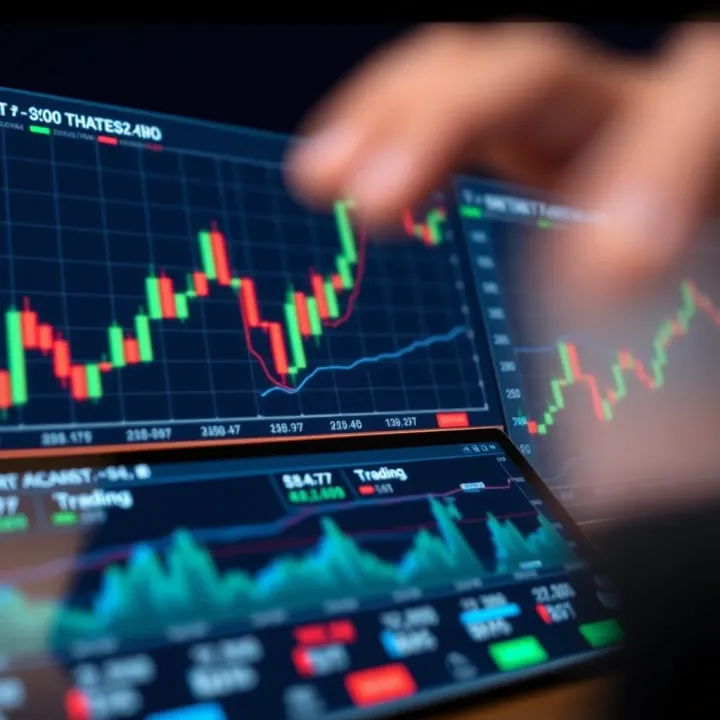
📈 Learn how to read trade charts in Pakistan's markets with this guide. Discover chart types, key components, patterns, and tips for smarter trading decisions.
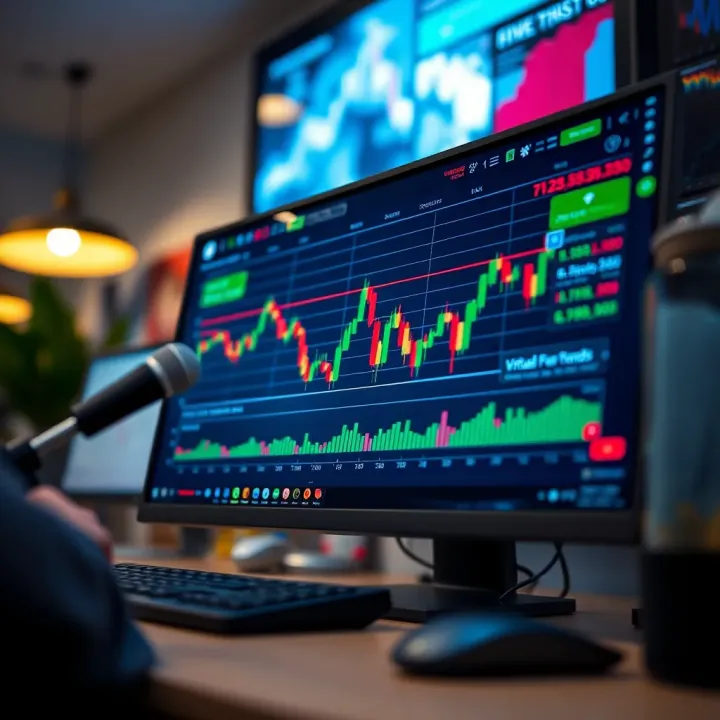
📈 Learn how trading demo accounts help Pakistani traders practice Forex & stocks risk-free. Tips to use them smartly & switch to live trading smoothly.
Based on 8 reviews