

Is Trading Halal or Haram? An Islamic Perspective
Is trading halal or haram? 🤔 Explore Islamic views on trading, key principles, scholar opinions, and practical tips for ethical trading in Pakistan.
Edited By
Ethan Clarke
Binary trading has caught the attention of many investors, including those in Pakistan, due to its simplicity and potential for quick returns. However, Muslim traders often wonder whether this form of trading aligns with Islamic law. This question is not just academic — it affects real investment decisions given the strict rules around halal (permissible) and haram (forbidden) financial activities.
At its core, binary trading involves predicting the price movement of assets like stocks, commodities, or currencies within a fixed timeframe. Traders bet on whether the asset's price will go up or down, and they either earn a fixed profit or lose the invested amount. This high-risk, all-or-nothing nature makes it different from conventional trading.
Islamic finance principles stress fairness, transparency, and the avoidance of gharar (excessive uncertainty) and maysir (gambling). These terms carry weight in determining the permissibility of any financial transaction. Because binary trading resembles a bet on price movements without ownership of the underlying asset, some scholars liken it to gambling, which is generally prohibited.
That said, Islamic perspectives on binary trading are not unanimous. Some scholars argue that if certain conditions are met—such as full transparency, no involvement of interest (riba), and genuine trading rather than mere speculation—then binary trading could be considered permissible. Others remain cautious due to the product's inherent risk and lack of clear asset ownership.
Understanding these nuances helps Muslim traders make informed decisions rather than relying on simplistic labels. Many Pakistani platforms and brokers offering binary options lack proper regulation, which raises further concerns under Islamic law.
Muslim investors should carefully evaluate the terms, conditions, and operational transparency of any binary trading platform. Consulting with trusted Islamic finance experts or scholars is also wise before engaging in such activities.
In the following sections, we will look deeper into Islamic rulings, key concerns around binary trading, and practical advice for Pakistani traders who want to stay within the boundaries of halal investment.
Understanding how binary trading works is essential for anyone considering this investment, especially when discussing its alignment with Islamic principles. Binary trading differs significantly from traditional methods, and appreciating its mechanism helps investors evaluate risks and compliance effectively.
Binary trading involves predicting whether an asset’s price—such as a currency pair, stock, or commodity—will rise or fall within a set time period. Unlike buying the asset itself, traders only guess the direction. For example, you might predict that the price of the Pakistan Stock Exchange’s KSE-100 index will increase over the next hour. If your prediction is right, you earn a fixed profit; if wrong, you lose your stake.
Trades are straightforward: you select an asset, decide on a direction (up or down), choose an expiry time, and invest a certain amount. Once the period ends, the result is either a predetermined payout or a total loss of your invested amount. This simplicity attracts many newcomers but also involves notable risks.
The returns in binary trading are fixed from the start. Typically, brokers offer 70–90% returns on successful trades. For instance, investing Rs 10,000 on a correct prediction could return Rs 17,000. However, an incorrect guess results in a total loss of the Rs 10,000. This all-or-nothing structure makes binary trading highly speculative and riskier than conventional investment.
Compared to conventional stock or forex trading, binary trading does not involve actual ownership of the underlying asset. In stock trading, you hold shares and can benefit from dividends or long-term growth. Forex trading allows you to buy or sell currencies with leverage and manage positions over time. Binary trading only focuses on price movement guesses without ownership or instrument holding.
Binary trading is much more speculative. It resembles a bet on price direction rather than investment based on fundamentals or market analysis. The outcomes are time-bound and fixed, meaning you know your possible gains or losses in advance but also face a higher chance of losing entire investment quickly.
The fixed payout and expiry time differentiate binary options clearly. You must predict price direction within minutes, hours, or days, and the contract ends automatically. Unlike conventional trading where positions can be held open or adjusted, binary contracts close at expiry with no further options. For example, predicting Pakistan rupee’s movement within 15 minutes offers a fixed return if correct, or total loss if not. This makes timing critical but also increases uncertainty.
Binary trading’s simplicity and fixed outcomes appeal to many, but its all-or-nothing nature demands careful understanding and risk management, particularly from an Islamic financial viewpoint.
Overall, understanding binary trading’s mechanism clarifies what investors are getting into—spotting a bet-like environment rather than traditional asset ownership. This knowledge helps explore whether such trading fits within Shariah guidelines or carries prohibitive elements like gambling or excessive uncertainty.
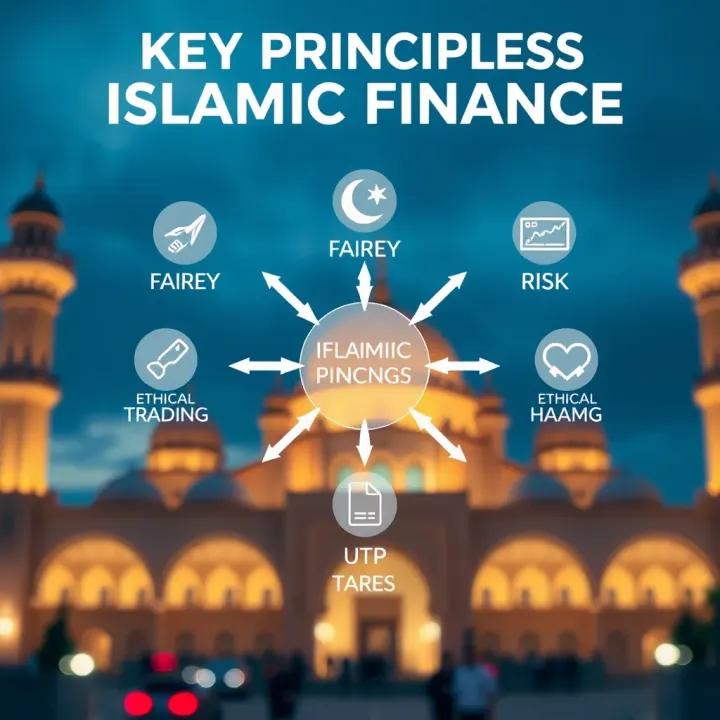
Islamic finance follows principles grounded in Quranic teachings and Hadith, emphasising fairness, transparency, and avoidance of exploitative elements. For traders and investors, understanding these rules is essential to ensure their activities comply with Shariah law. These guidelines do not only govern the type of transactions permitted but also the ethical approach one must adopt while trading.
Gharar refers to excessive uncertainty or ambiguity in contracts. Islamic finance forbids transactions where the terms are unclear or the outcome is highly uncertain because they lead to disputes and unfairness. For example, buying a product without knowing its exact specifications or price would be considered gharar and thus impermissible. In trading, this means contracts must clearly state what is being bought or sold, under what conditions, and the risks involved.
In binary trading, the rapid nature and sometimes opaque structure of contracts raise concerns about gharar since investors might not fully understand the terms or the underlying assets. This uncertainty conflicts with Islamic ideals that stress transparency and certainty in dealings.
Maysir involves gaining wealth through chance or betting rather than productive effort or exchange of real value. Islam prohibits gambling since it leads to unjust gain and harms social welfare. The Quran explicitly warns against games of chance where money changes hands without equivalent economic activity.
Binary trading often resembles gambling to some scholars because its outcome depends on market movement predictions within a short time, sometimes like a bet on a price rise or fall. Unlike conventional investing, which is tied to the real economic value of shares or assets, this speculative element triggers concerns about maysir.
Islam demands fairness and transparency to protect all parties in financial deals. This includes clear disclosure of terms, honest communication, and avoidance of deception. The Prophet Muhammad (PBUH) emphasised the need to avoid cheating and exploitation in trade.
In practical terms for traders, this means contracts should be straightforward, and platforms must provide truthful information about risks, prices, and charges. This ensures that investors can make informed decisions without being misled or exposed to unfair practices.
Islam allows investments in assets and contracts that comply with Shariah principles. These include tangible goods, equities of companies operating ethically, gold, silver, and Shariah-compliant derivatives like Sukuk. Contracts must involve real economic activity, avoid interest (riba), and clearly define ownership and obligations.
For example, investing in a company engaged in halal business is acceptable, but shares from alcohol or gambling industries are not. Similarly, contracts must avoid ambiguity and speculations purely based on price changes.
Ethical trading in Islam focuses on avoiding harm and promoting social good. It encourages avoiding investments in businesses that exploit workers, involve unfair labour practices, or damage the environment. Islam values stewardship of assets and responsibility towards society.
Hence, even if a trade is technically permissible, investors might reject it if it conflicts with higher ethical standards. For example, trading in companies with poor environmental records or dubious labour standards would be discouraged.
In Islamic finance, intention (niyyah) plays a vital role. A trade made with honest intention, seeking lawful profit without injustice, is valued. Reckless risk-taking or greed-driven speculation is discouraged. Proper risk management aligns investments with Islamic teachings by preventing harm and loss.
Practical steps include understanding market risks, limiting exposure, and avoiding trades based solely on guesswork or hoping for quick gains. Pakistani investors, for example, should be conscious of local market volatility and avoid speculative instruments without clear Shariah backing.
Islamic finance principles provide a framework that balances profit-making with ethical responsibilities. Sticking to these principles helps investors avoid questionable trading forms and promotes a just financial system.
This section highlights the key Islamic finance rules relevant to trading, setting the stage for evaluating binary trading in the following sections.
Scholarly opinions play a critical role in determining whether binary trading aligns with Islamic principles. Muslims seeking to invest ethically often rely on the guidance of qualified Islamic scholars who interpret Shariah law in the context of modern financial instruments. Understanding these views helps investors navigate the uncertainties surrounding binary options, especially given their controversial nature.
Valid contracts and clear terms
Some scholars argue that binary trading can be halal if the contracts involved are clear, explicit, and free of ambiguity. This means the terms — such as the asset under trade, expiration time, and payout amount — must be transparent and agreed upon by both parties at the outset. For example, if a trader knows upfront they will earn a fixed return or lose the invested amount based purely on the asset’s price direction at expiry, this clarity satisfies the requirement of avoiding gharar (excessive uncertainty) in transactions.
Comparison with permissible derivatives
Proponents compare binary options to derivatives like options or futures, which have been accepted by many Islamic scholars when structured properly. Since some Islamic financial contracts allow for limited risk-taking under clear terms and genuine trade in underlying assets, binary trading, in this view, can be permissible if treated as a risk-sharing contract rather than pure gambling. For instance, contracts that allow buying or selling a right without ownership transfer but with defined conditions are considered under Islamic finance as long as no excessive speculation is involved.
Condition of genuine trade and ownership
Another supporting argument centers on the notion that halal trading requires genuine exchange of assets or rights. Some scholars permit binary trading if traders possess a legitimate claim or right over the underlying asset or if the contract represents a valid form of trade. This means the investment should not be a mere bet on price movement but linked to real economic activity. For example, contracts tied to market instruments on regulated exchanges might meet this condition, differentiating them from mere speculation.
Excessive speculation and gambling resemblance
Critics highlight that binary trading often resembles gambling (maysir) because it involves betting on short-term price movements with a fixed payout or loss. This high level of speculation typically lacks underlying economic purpose and primarily depends on chance or market volatility. In many cases, traders have little control or insight into the asset itself, making the activity akin to gambling, which is clearly prohibited in Islam.
Possibility of deception and unfair practices
Many Islamic scholars raise concerns about the potential for deception in binary trading platforms. Due to the unregulated nature of some brokers, practices such as manipulating price feeds, delayed payouts, or unfair contract terms are common. These unethical behaviours conflict with Islamic principles of fairness and transparency, increasing the risk of injustice (zulm) towards investors. Pakistani investors should be particularly wary of platforms without clear regulatory oversight.
Lack of asset ownership and real economic activity
Another objection is the absence of actual ownership or transfer of assets in binary trading. Critics argue that since traders do not hold the underlying asset or contribute to real economic transactions, the activity lacks authenticity. Instead, it becomes a zero-sum game purely based on speculation. In Islamic finance, investment ideally involves participation in productive economic activities, making mere speculation without asset ownership questionable.
The diversity of scholarly opinions emphasises the need for individual judgment and consideration of platform transparency, contract clarity, and personal intention before engaging in binary trading according to Islamic principles.
Pakistani investors interested in binary trading must pay close attention to practical aspects that affect both compliance with Islamic principles and financial safety. This involves not only understanding the risks but also ensuring that the platforms used meet regulatory standards and that contracts are clear and fair. Being aware of these factors can help prevent losses and ethical issues.
Choosing regulated and transparent platforms is a key step for investors. In Pakistan, platforms regulated by reputable bodies like the Securities and Exchange Commission of Pakistan (SECP) or international authorities offer better protection against fraud and unfair practices. A transparent platform clearly explains its terms, fees, and payout structures, which helps investors avoid ambiguity that Islamic law discourages.
Verification of contract terms is equally important. Before trading, investors should carefully review the contract conditions, including the asset involved, expiry times, and the payout ratio. Contracts with ambiguous or hidden clauses can lead to gharar (excessive uncertainty), which is prohibited in Islam. Pakistani traders should ensure all terms are upfront and unambiguous to maintain compliance.
Awareness of market risks and capital loss cannot be overstated. Binary trading is highly speculative, and the chance of losing capital is significant. Investors must treat it like high-risk gambling unless a clear strategy reduces risk. Islamic finance advises prudence in risk-taking to avoid unjust loss. It is crucial for Pakistani traders to only invest amounts they can afford to lose and to be wary of platforms promising guaranteed returns.
Islamic stock and mutual fund investments offer a more acceptable way to grow wealth. Many mutual funds in Pakistan follow Shariah-compliant principles by investing in halal businesses and avoiding interest-based or unethical sectors. Investing in such funds or directly purchasing stocks of compliant companies like Engro or Habib Bank Limited aligns better with Islamic guidelines.
Use of Sukuk and Shariah-compliant derivatives also presents a feasible alternative. Sukuk, which are Islamic bonds, provide profit-sharing returns without interest, making them suitable for risk-averse investors. Additionally, properly structured derivatives approved by Shariah scholars can offer hedging options while respecting Islamic law.
Long-term trading strategies aligning with Islamic principles focus on patience and genuine economic activity. Instead of quick speculative trades, Pakistani investors can benefit from holding shares or assets over time, supporting real growth and avoiding gharar and maysir (gambling). This approach also fits well with local market realities, where sudden volatility is common.
Practical knowledge and choosing the right investment vehicles are vital for Pakistani Muslims who want to honour Islamic financial ethics while protecting their capital in volatile markets.
Investors should always consult knowledgeable Islamic finance experts or scholars before engaging in complex trading activities to ensure their choices are both financially sound and religiously compliant.
When it comes to binary trading, the decision to engage must consider Islamic rules carefully. This conclusion draws together the main ideas discussed, highlighting practical benefits and critical points that every investor in Pakistan should keep in mind. Understanding how Islamic teachings view such speculative activities helps investors protect their faith and finances.
Importance of intention, knowledge, and caution
In Islam, niyyah (intention) plays a big role in judging an act. If a person approaches binary trading without solid knowledge or with the hope of unjust gains, it leans towards haram. For example, blindly betting on price movements merely as gambling conflicts with Islamic ethics. On the other hand, someone who fully understands the risks and treats trading cautiously, aiming for ethical profit, aligns better with halal principles.
Varied scholarly opinions requiring personal judgement
Scholars differ on binary trading because it contains elements of speculation akin to gambling, which Islam forbids, but also resembles some derivatives which are accepted. This diversity means investors must weigh these views themselves. There's no one-size-fits-all ruling; a person’s context, knowledge, and intention influence whether binary trading suits their religious commitments.
Recommendation to consult qualified Islamic scholars
Given the complexities, it’s wise for investors to talk to qualified Islamic scholars before trading. These experts can assess the specific platforms, contract terms, and trading style against Shariah rules, offering personalised guidance. This step helps avoid confusion and ensures investment decisions respect Islamic teachings, especially for Pakistani Muslims unfamiliar with modern financial instruments.
Education on Islamic financial principles
Pakistani investors should invest time to learn Islamic finance basics. Knowing what constitutes gharar (excessive uncertainty), maysir (gambling), and riba (interest) equips traders to spot halal and haram aspects. For instance, understanding why a simple share purchase in a halal company is usually fine, whereas a bet on sudden price changes in binary options can be problematic.
Prefer options with clear Shariah oversight
When considering investments, pick options regulated and certified by recognised Shariah boards. Islamic mutual funds, Sukuk (Islamic bonds), or stock investments approved by bodies like the Central Shariah Supervisory Board provide clearer halal assurance. This caution helps avoid shady platforms that offer binary trading contracts without transparency.
Management of financial risks within ethical boundaries
Risk is unavoidable but must be managed ethically. Pakistan’s volatile market and personal financial limits demand setting clear stop-loss levels and avoiding reckless bets. Responsible investing means not chasing quick wins through uncertain tools like binary options but opting for balanced portfolios aligning with Islamic values and personal risk appetite.
Navigating binary trading according to Islamic teachings hinges on understanding, intention, and careful evaluation — all needed to protect one's faith and money in Pakistan’s growing financial ecosystem.
Is trading halal or haram? 🤔 Explore Islamic views on trading, key principles, scholar opinions, and practical tips for ethical trading in Pakistan.
Is trading on Quotex halal or haram? 📉 Explore Islamic finance rules, risk factors, and fatwas to help Pakistani traders decide wisely in Shariah-compliant markets.
Is using Quotex halal or haram? 🕌 This article discusses Islamic finance rules, scholar opinions, and practical points to guide Pakistanis on safe trading choices.

Wondering if crypto spot trading is halal or haram? Explore Islamic views, crypto nature, and guidelines relevant to Muslim investors in Pakistan 🕌💰
Based on 5 reviews